The Situation
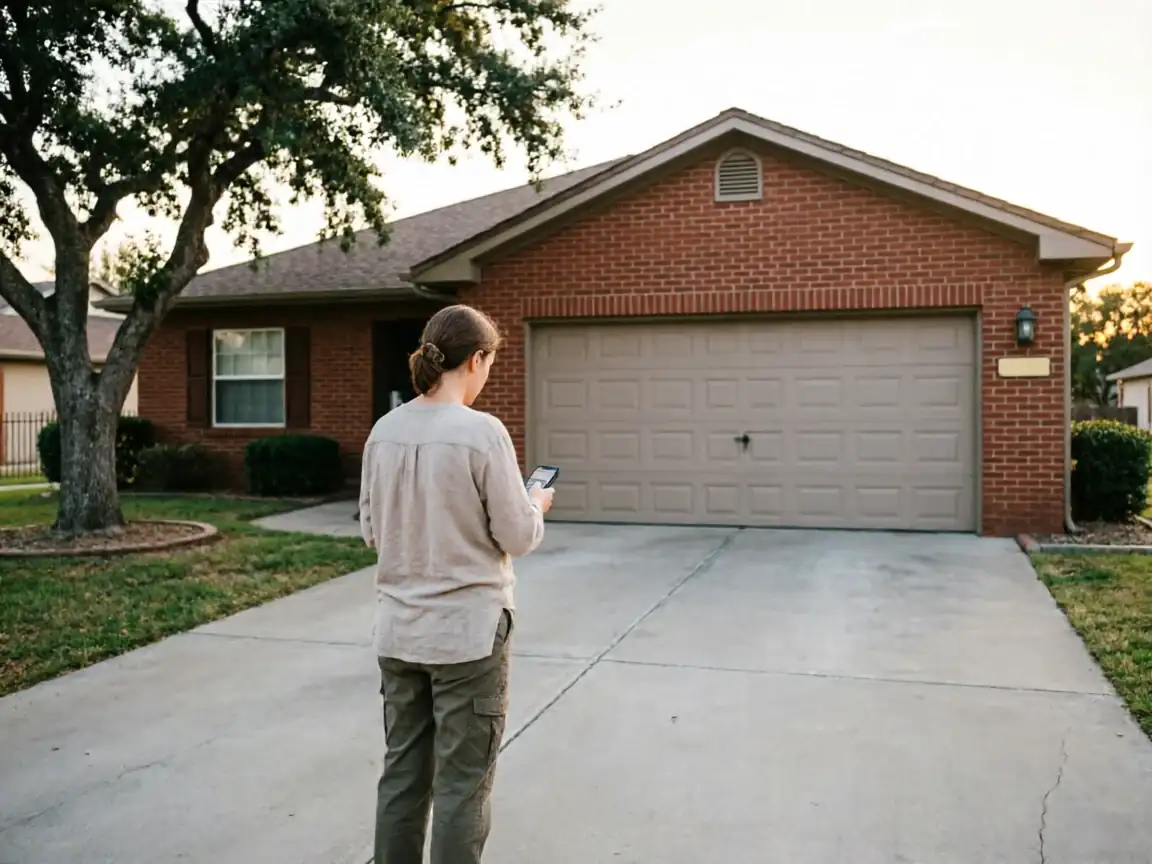
Most of the houses we get called to in Friendswood went up somewhere between 1956 and 2014, with the bulk of that stock dating to the 1980s and 90s. That matters because track brackets from that era were bolted to jamb framing that's had thirty-plus years to settle, shrink, or get re-shimmed by somebody doing other work in the garage. When a door comes off track here, it's rarely a sudden event. It's a bracket that's been a sixteenth of an inch out of true for years, finally letting a roller walk past the lip of the track on a cold morning or a humid one. We see this across the older pockets of the 24 named areas that make up this part of the county just as much as in newer sections, because track alignment problems don't care how new the siding is - they care how the frame behind it has moved.
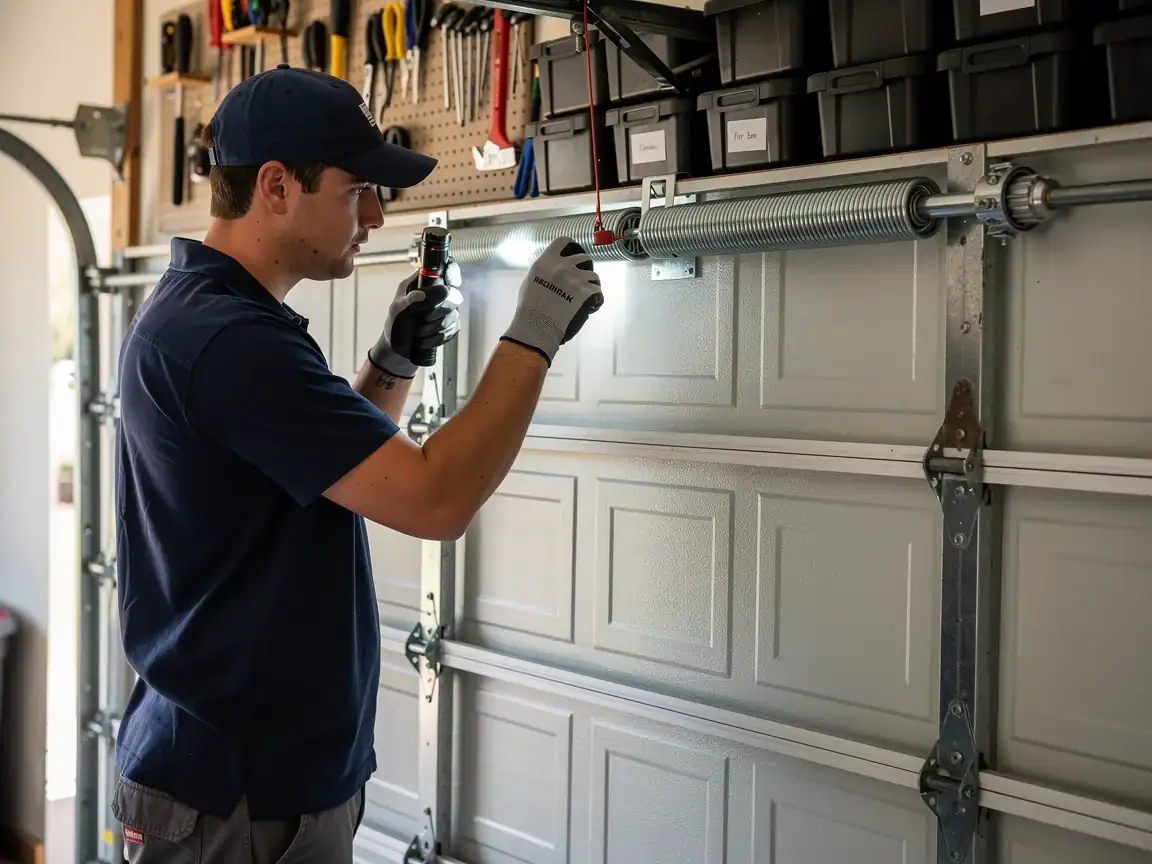
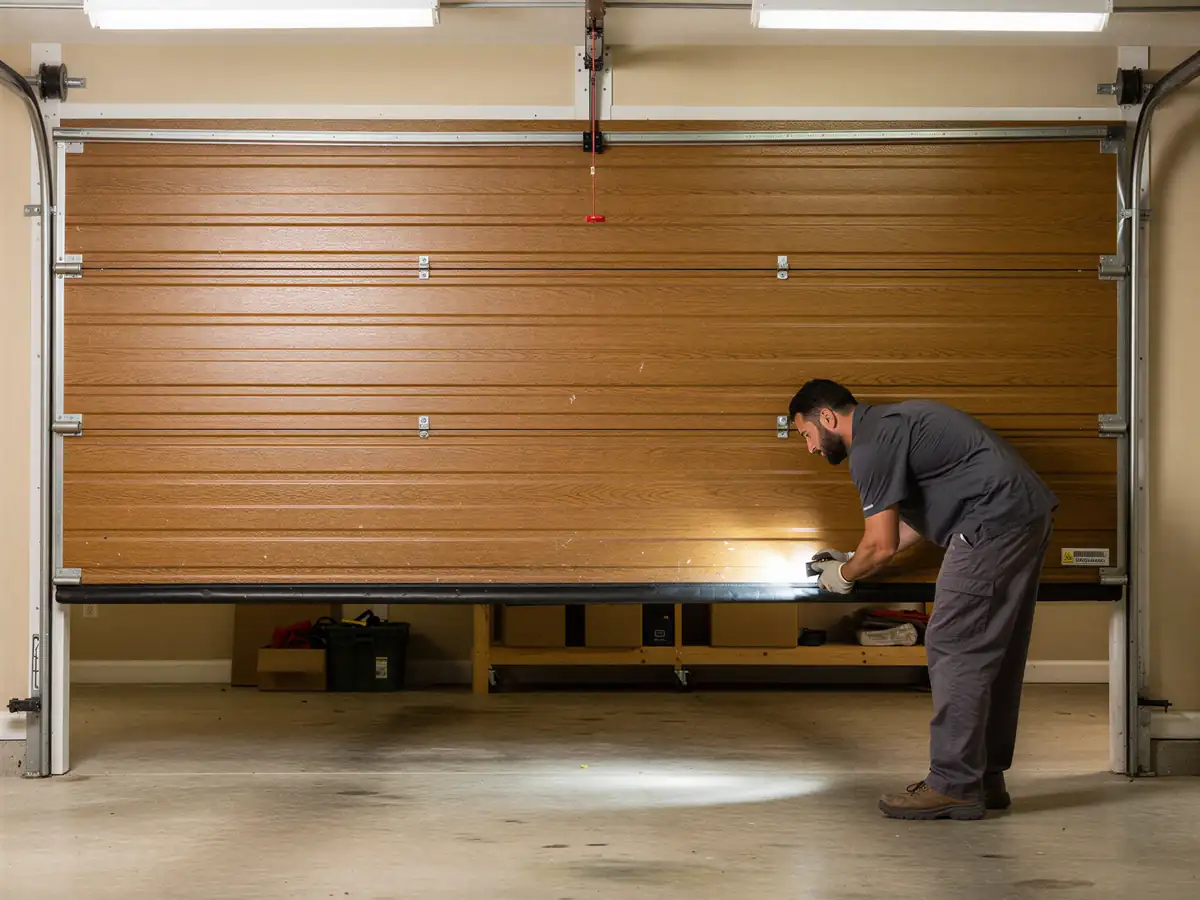
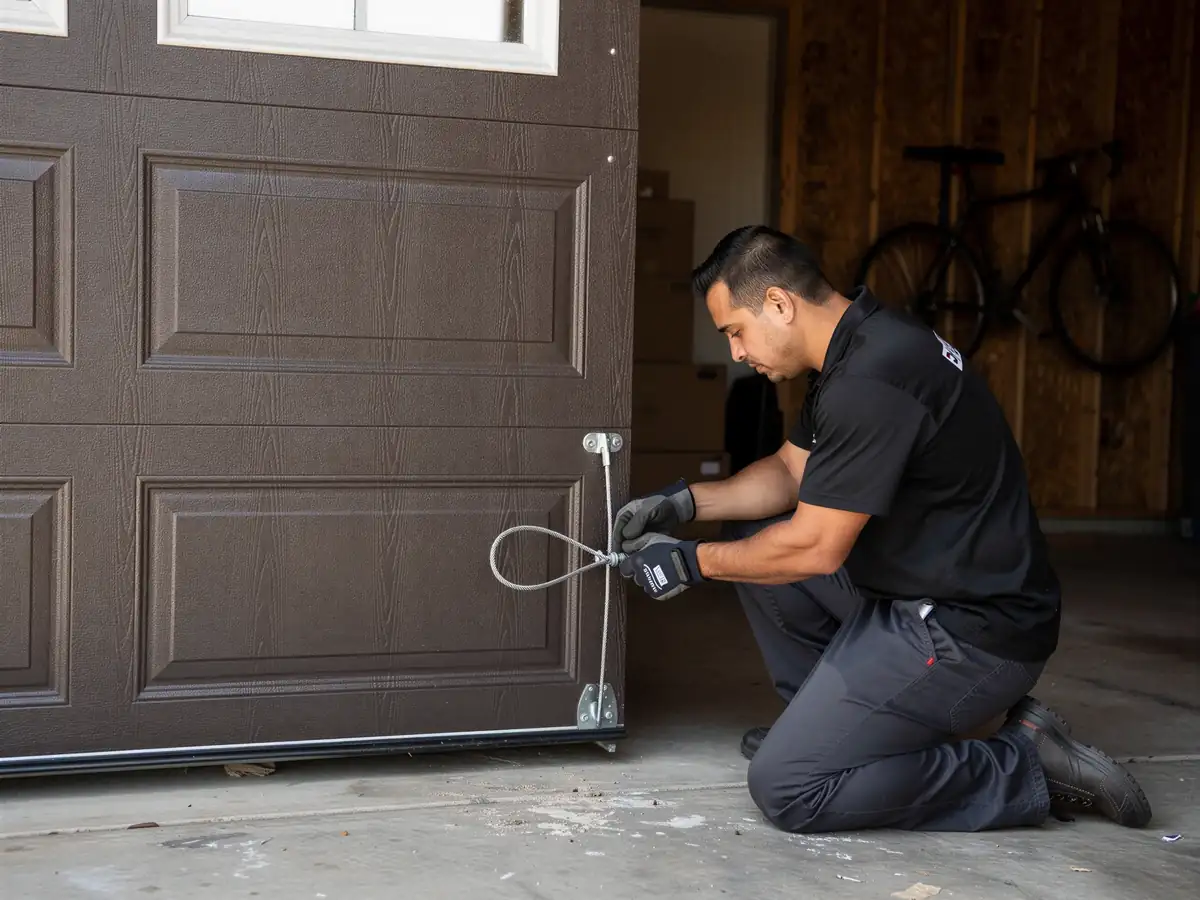
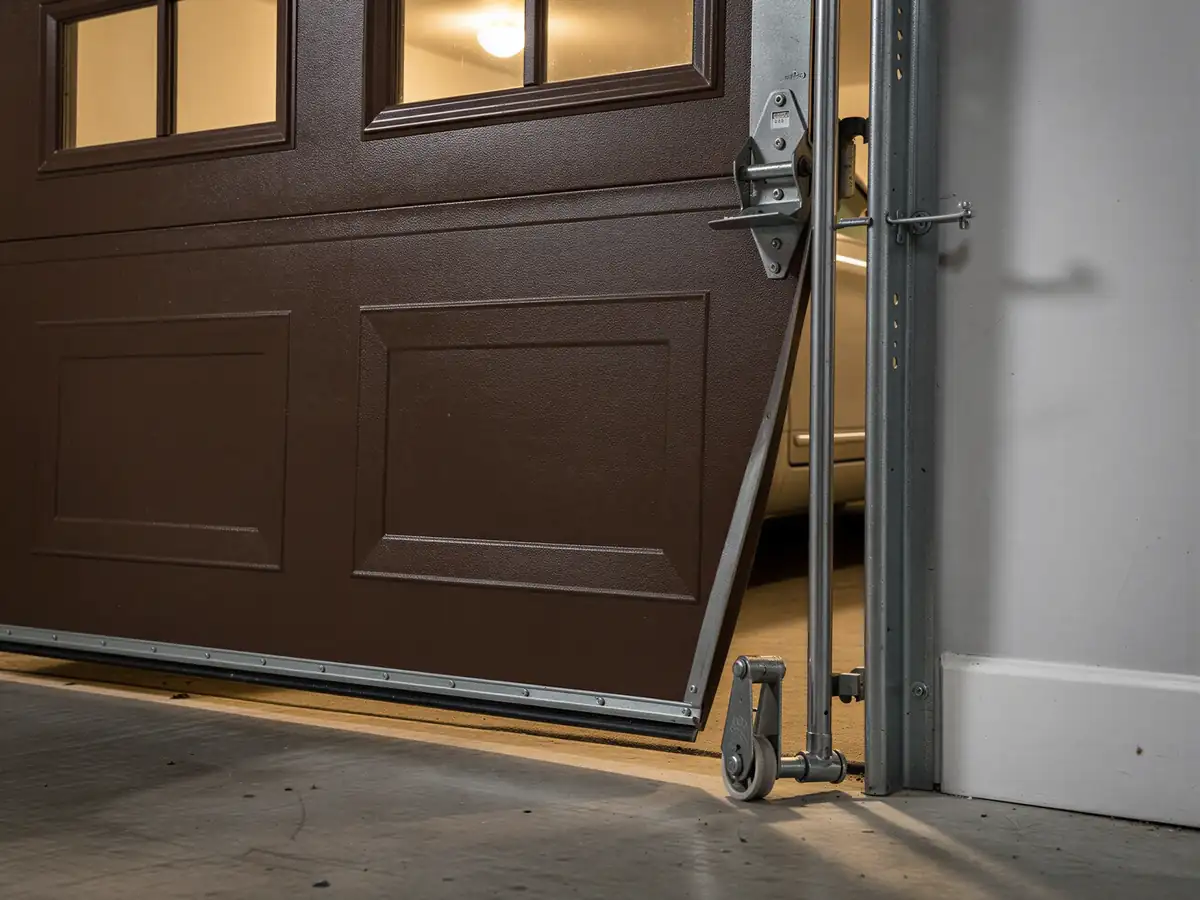
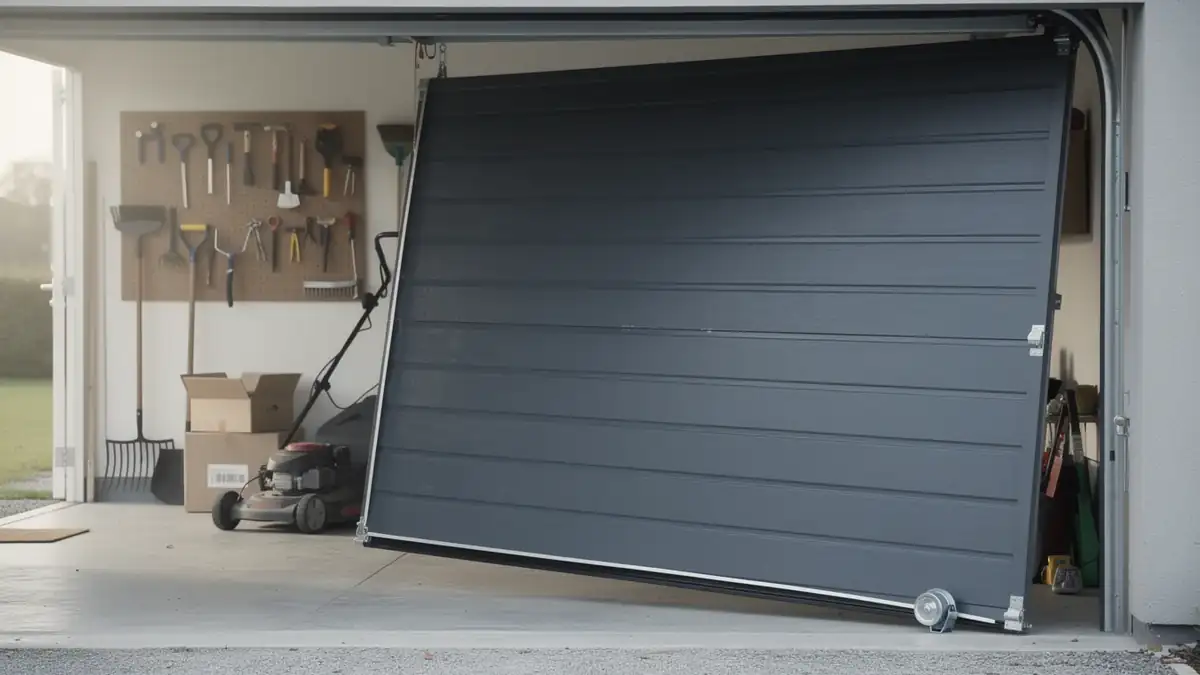
The giveaway is usually a door that runs rough on one side, or a gap that opens between the roller and the track right at the second or third panel up from the bottom. If you can see daylight there, the track's already bent or the bracket's already loose - it's not going to fix itself.
The Common Mistake
The mistake we see most is somebody noticing the door drags or squeals, spraying the track with whatever's under the sink, and calling it handled. Lubricant doesn't fix a bent track or a loose bracket - it just masks the noise for a week or two while the roller keeps chewing a groove into bent steel. By the time the door actually jumps off, the track itself is usually damaged enough that it needs replacing rather than re-bending, which turns a twenty-minute bracket tightening into a bigger job.
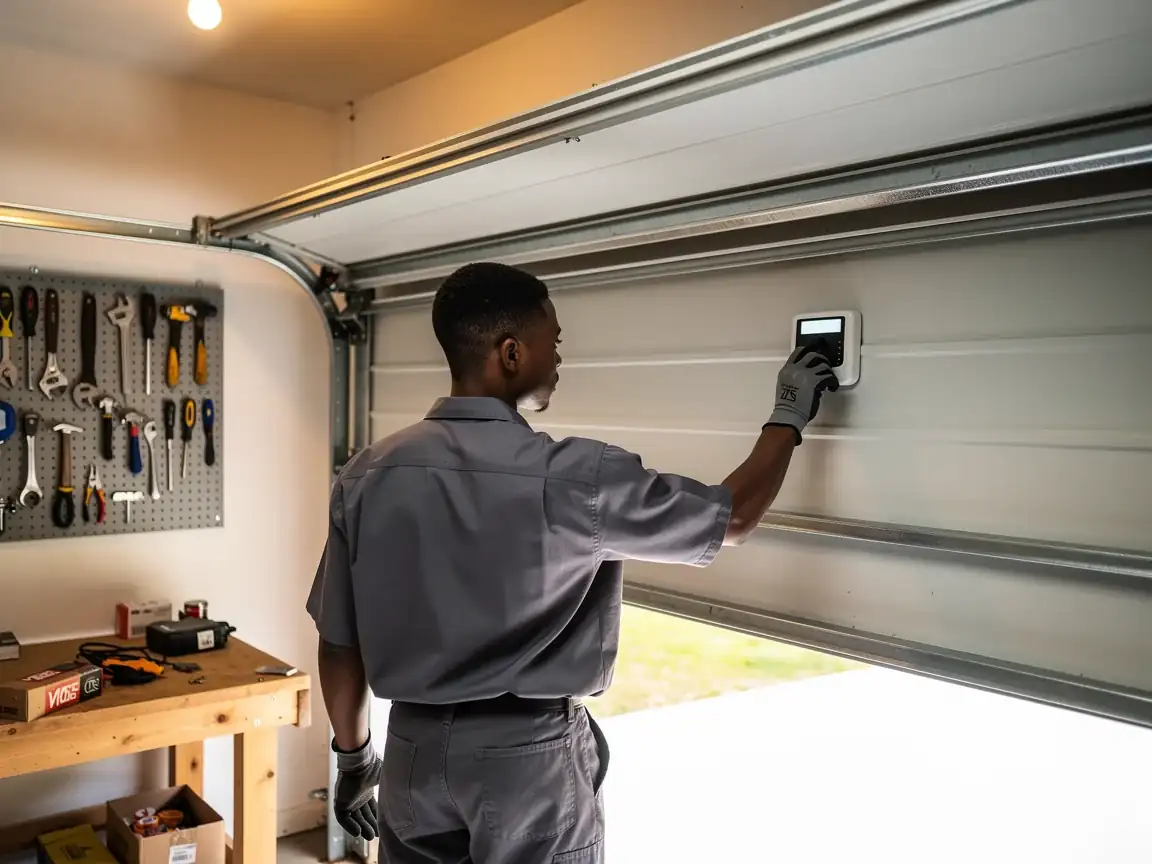
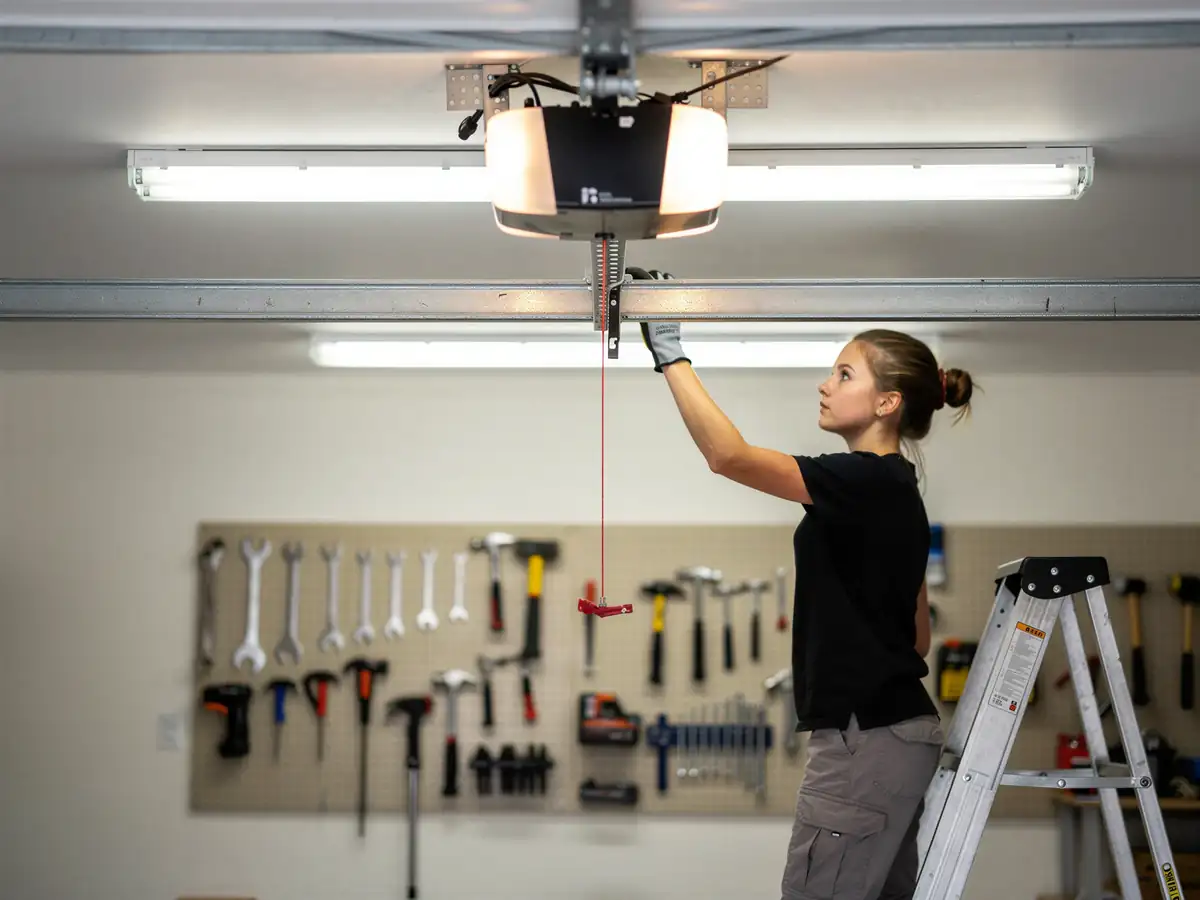
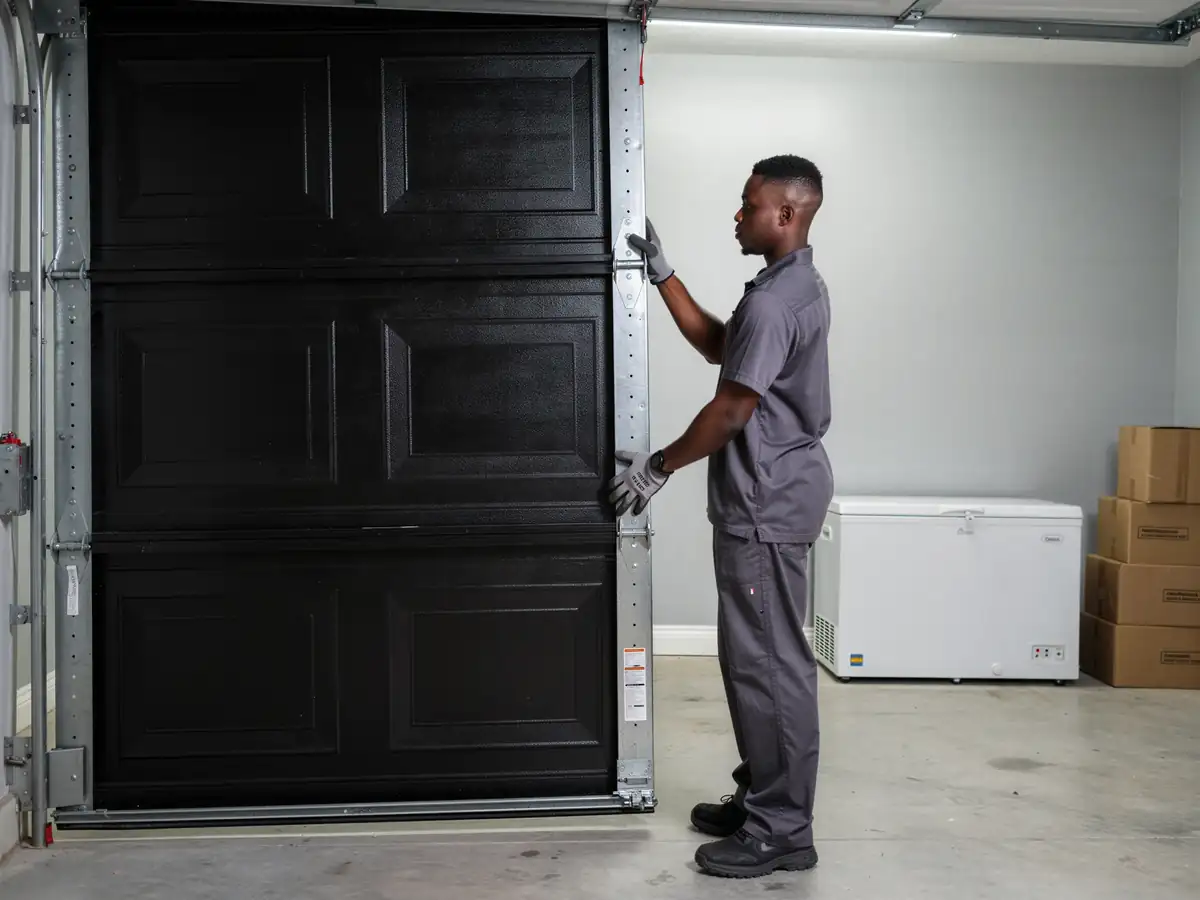
The other mistake is forcing the opener to keep running a door that's binding. The opener doesn't know the difference between a door that's stuck and a door that's just heavy - it keeps pulling until something gives, usually a cable or the opener's drive gear. On houses with original hardware from the 1980s and 90s stock common across this area, that drive gear is often the same age as the house, and it's not a part we carry on the truck for every model.
What Local Conditions Do
We're in a mild climate with occasional freeze here
Which doesn't sound like much compared to places that get real winters, but it still moves metal. A bracket that's slightly loose in October can tighten up on a cold snap and loosen again by February, and that repeated small movement is exactly what walks a roller out of track over a few seasons. It's not dramatic weather damage - it's just enough cycling to work a fastener loose that nobody ever checks because nothing looks wrong from the driveway.
Humidity plays a part too
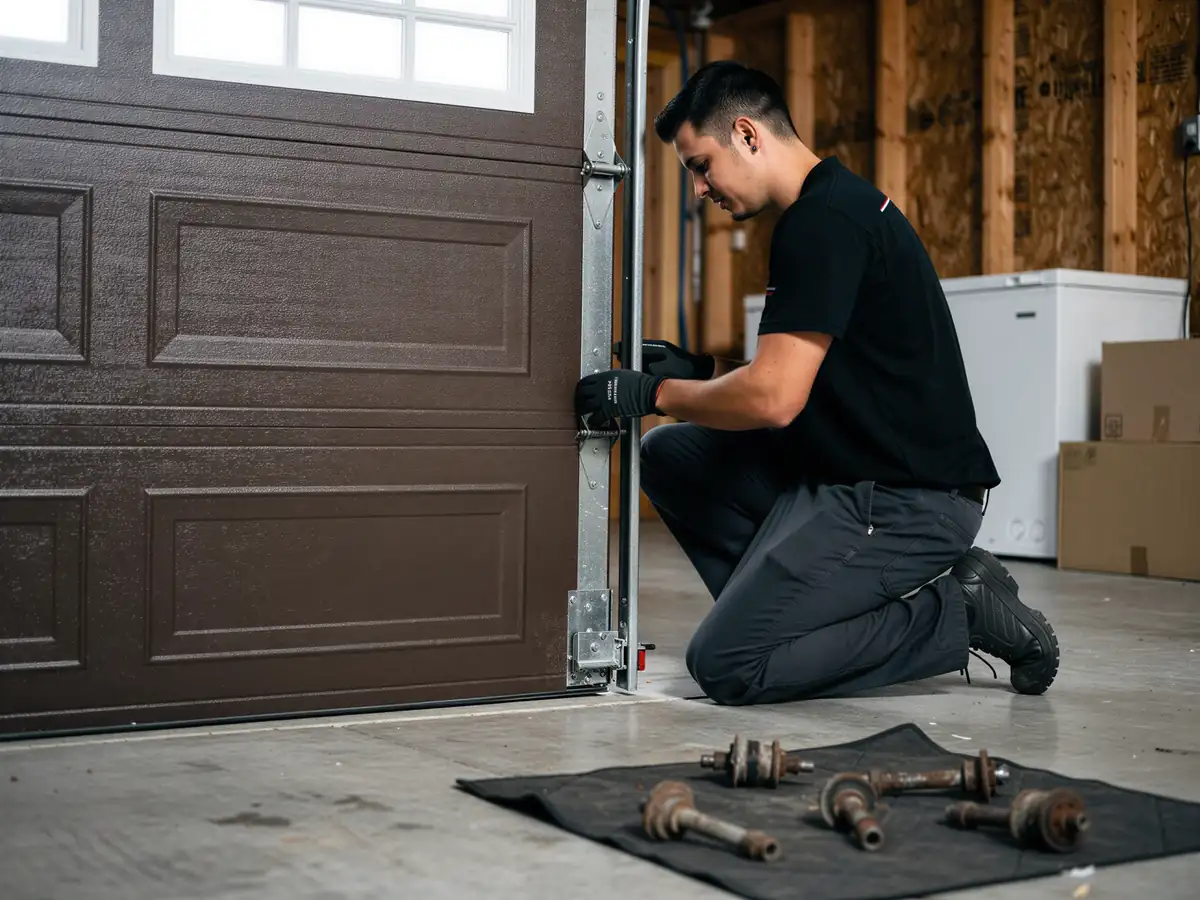
Garages here aren't usually climate controlled, and the track hardware on older homes can pick up surface rust at the bracket bolts well before the track itself looks bad. Rust on a bolt means it's harder to re-tighten correctly, and a half-tightened bracket is worse than a loose one you know about - it gives the illusion of being fixed.
What You Pay
We don't have a flat number to quote you here because what a track job costs depends on whether it's a bracket re-set or a full track and roller swap, and that depends on how long the door's been running misaligned before anyone called. A caught-early bracket problem is a small job. A door that's been jumping track for a month and has bent the rail is a different estimate entirely. If you want a number, we need to look at it - but if the door's grinding or you've seen a gap at the roller, don't wait for it to get worse, because the repair only gets bigger.