Time on the Job
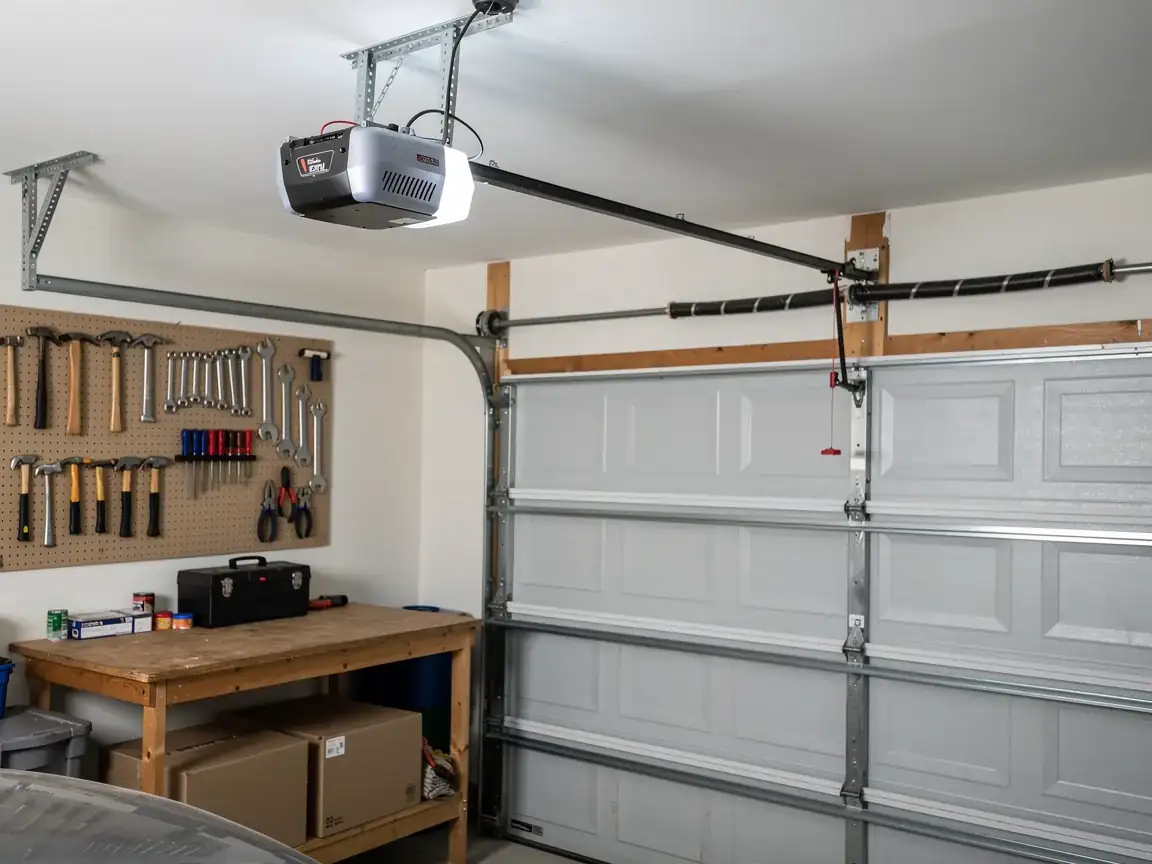
Most of the maintenance calls we take in Sienna aren't about rot or rust on an old door - they're about builder-grade parts hitting the end of their first life cycle. The median home here was built around 2007, which means a lot of these doors are now 17 to 18 years into service on the original opener and the original springs. That's right in the window where a spring that was never serviced starts losing tension, and a plastic idler bearing that came stock on the opener rail starts to crack rather than wear smoothly.
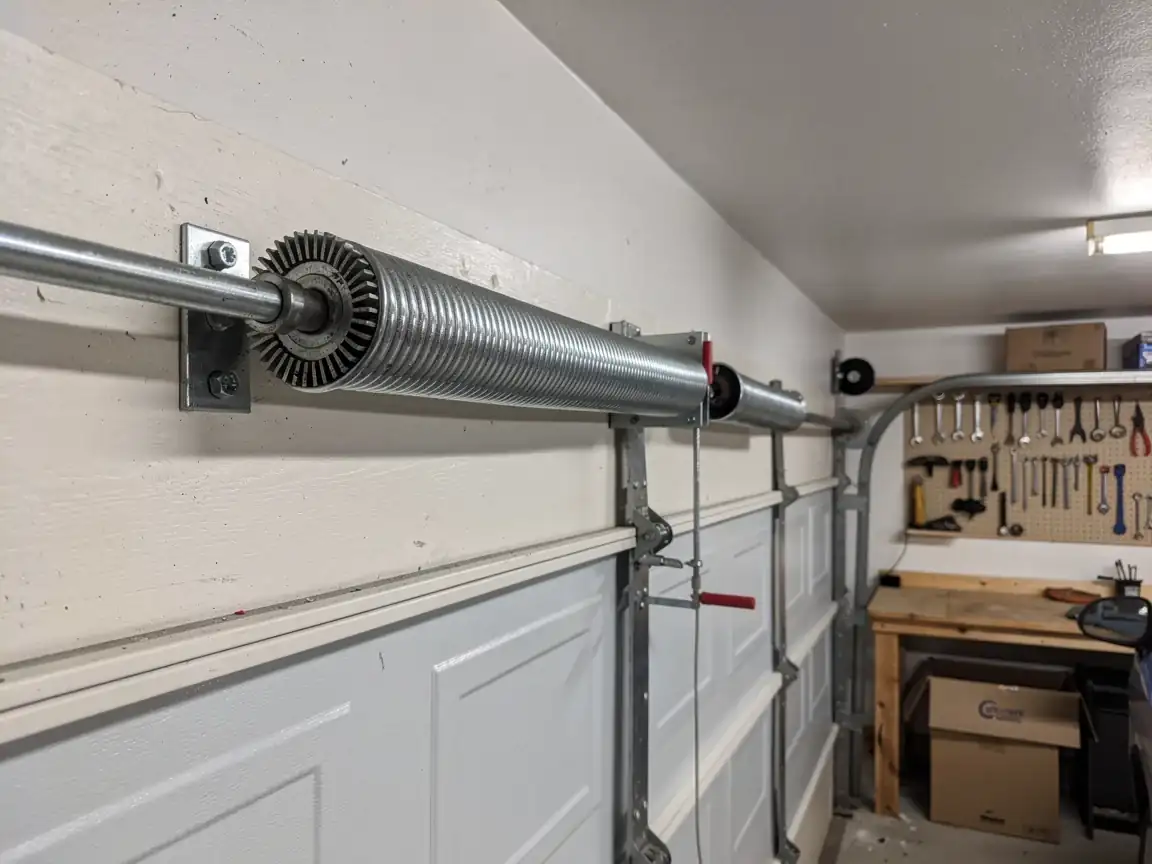
Compare that to older sections of the broader service area, where houses went up as far back as 1956 and springs have likely already been replaced once or twice. Sienna is the opposite problem: a lot of first-generation hardware that's aging out all at once, because the neighborhood itself went up in a tighter window. When we're out this way, we're usually checking whether the original torsion spring still matches the door weight, whether the opener's drive gear has worn down, and whether track alignment has drifted from years of thermal expansion in our climate - mild with the occasional freeze, which is gentler on hardware than a harsh winter but still cycles the metal twice a year.
The Complications
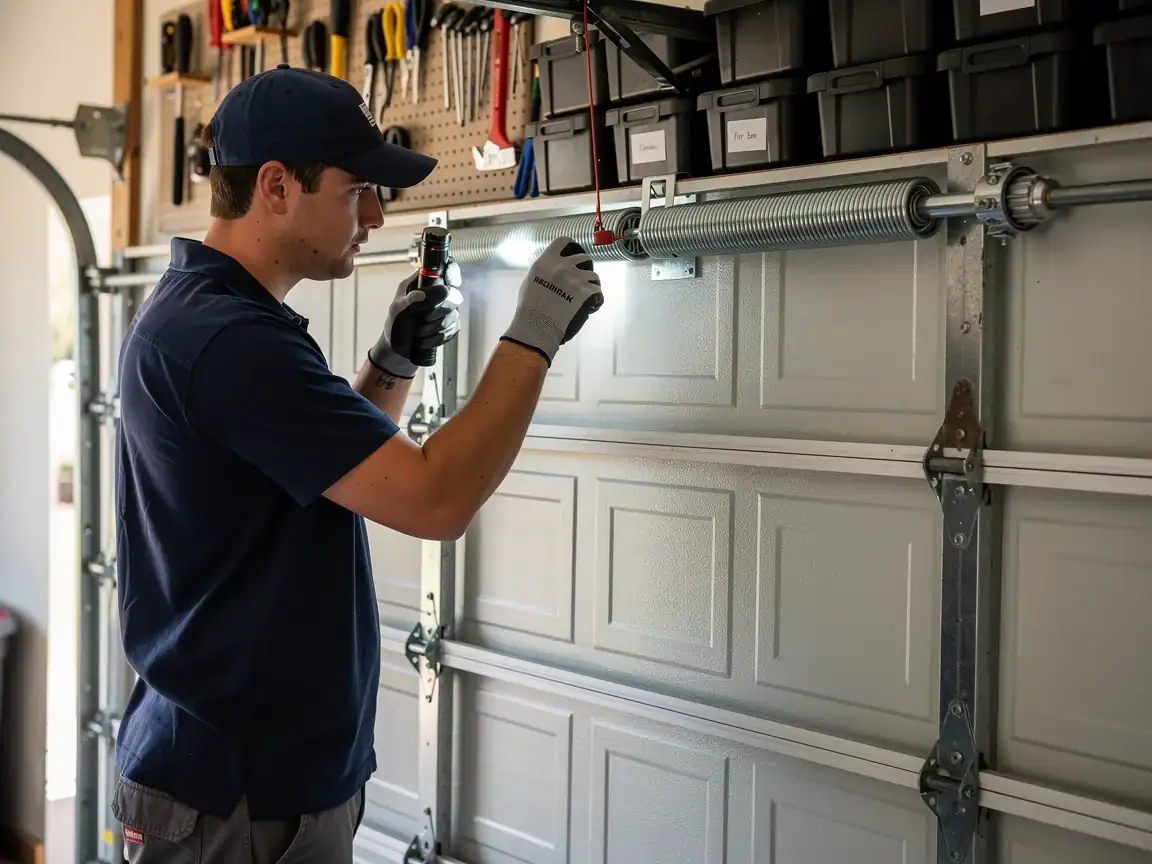
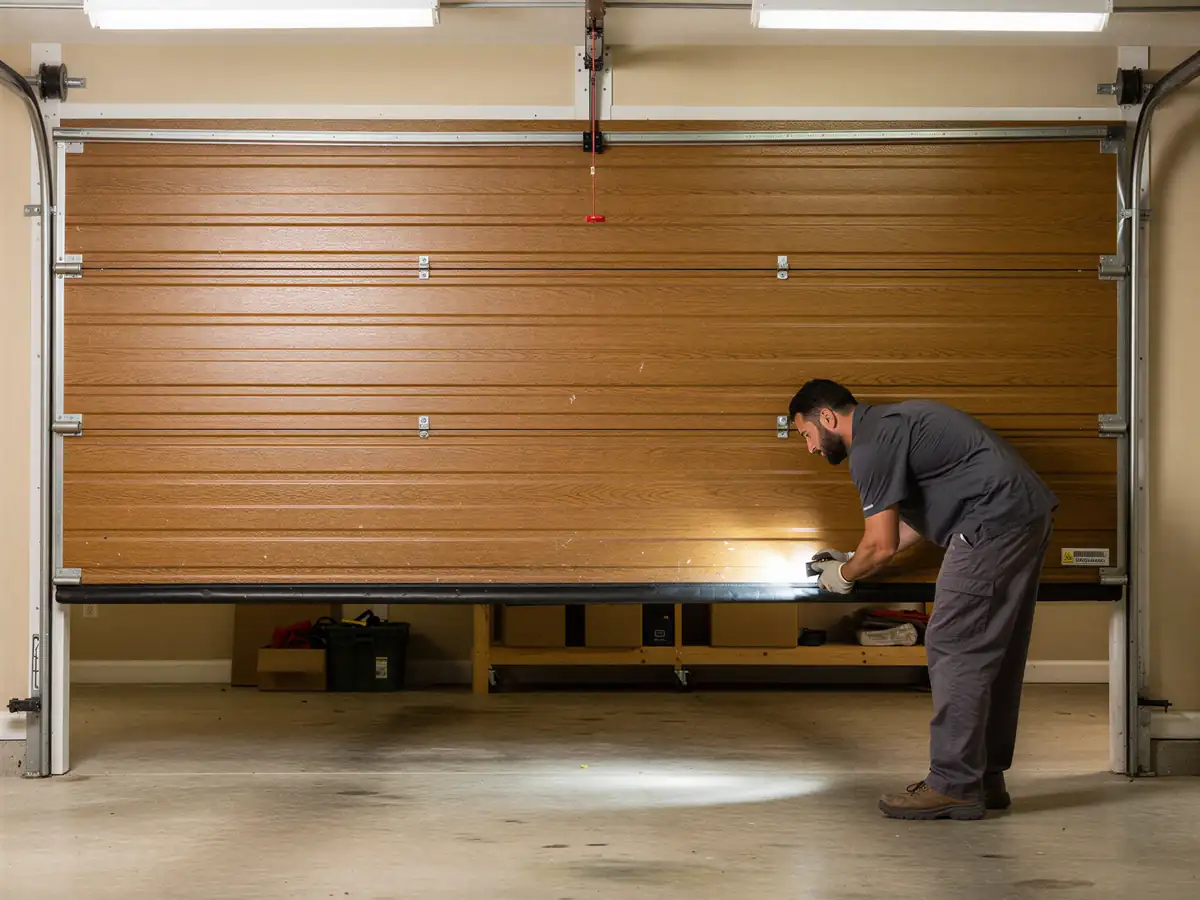
The complication with newer construction is that builder-installed hardware is often sized to a budget, not to the door. A heavier insulated door on a spring rated for a lighter one shows up as excess strain on the opener motor long before the spring itself fails outright - you'll hear the opener working harder, not see an obvious snapped coil. That's harder to catch on a quick visual check, which is why we test lift balance by hand rather than just looking at the spring.
We're honest about one limit here: if a part is proprietary to a specific builder-grade opener model and the manufacturer has discontinued it, we may need to replace the opener rather than repair it, since we can't source parts that don't exist anymore. That's more common in homes from a single development wave like Sienna's than in older areas with more hardware variety. We travel out from Friendswood for these calls, about 18 miles each way, so we try to diagnose everything that needs attention in one visit rather than making a homeowner schedule a second trip for something we could have caught the first time.
What You Are Seeing
If your door is sticking partway up
Or the opener strains and reverses before fully closing, that's usually the spring losing its factory tension rather than anything wrong with the opener itself. On a 2007-era door, this is the stage where it's normal, not a sign something was installed wrong.
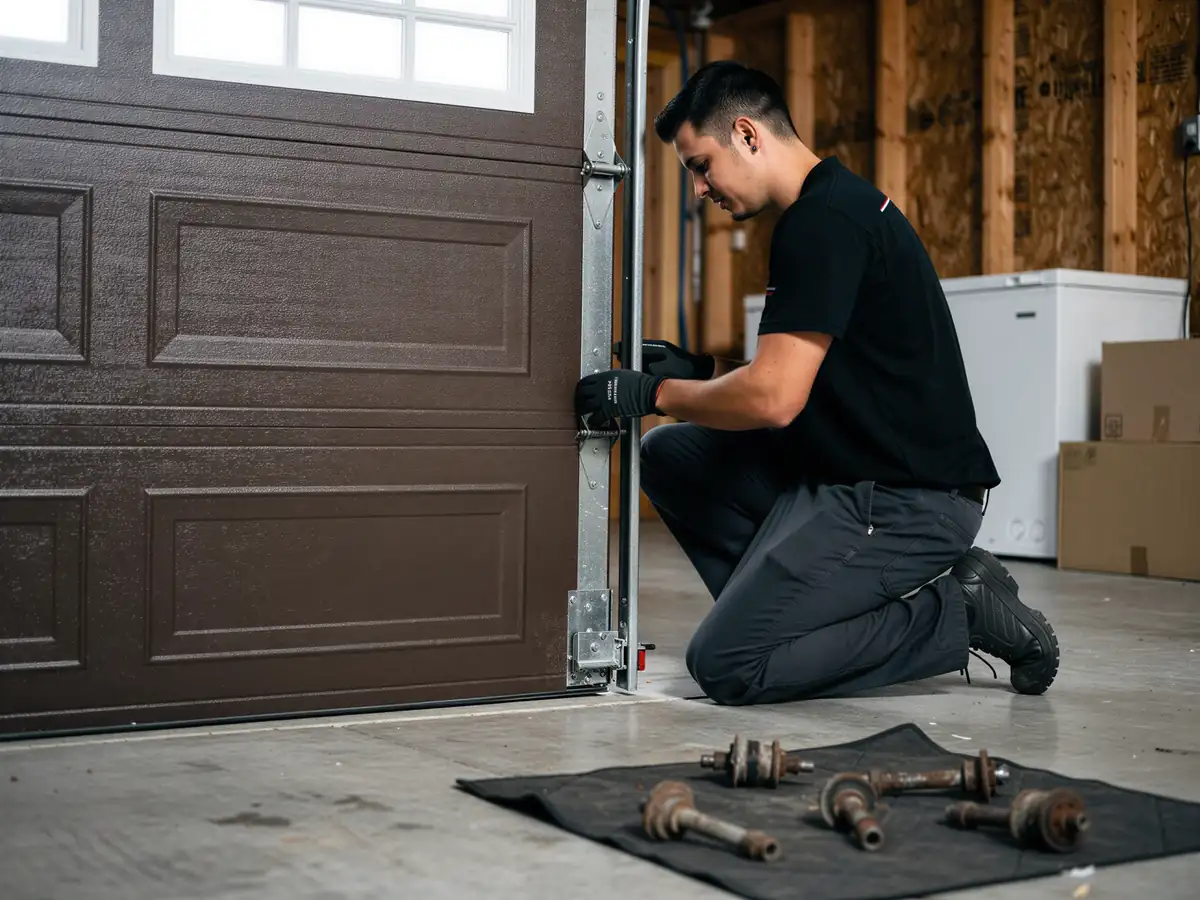
A chirping or grinding sound on the way up or down points to the stock rollers
Plastic or nylon ones that came with the original build and are now dry or chipped. These rollers are cheap to swap and it's one of the more worthwhile preventive jobs on a house this age, since replacing them before they fail avoids a jammed track later.
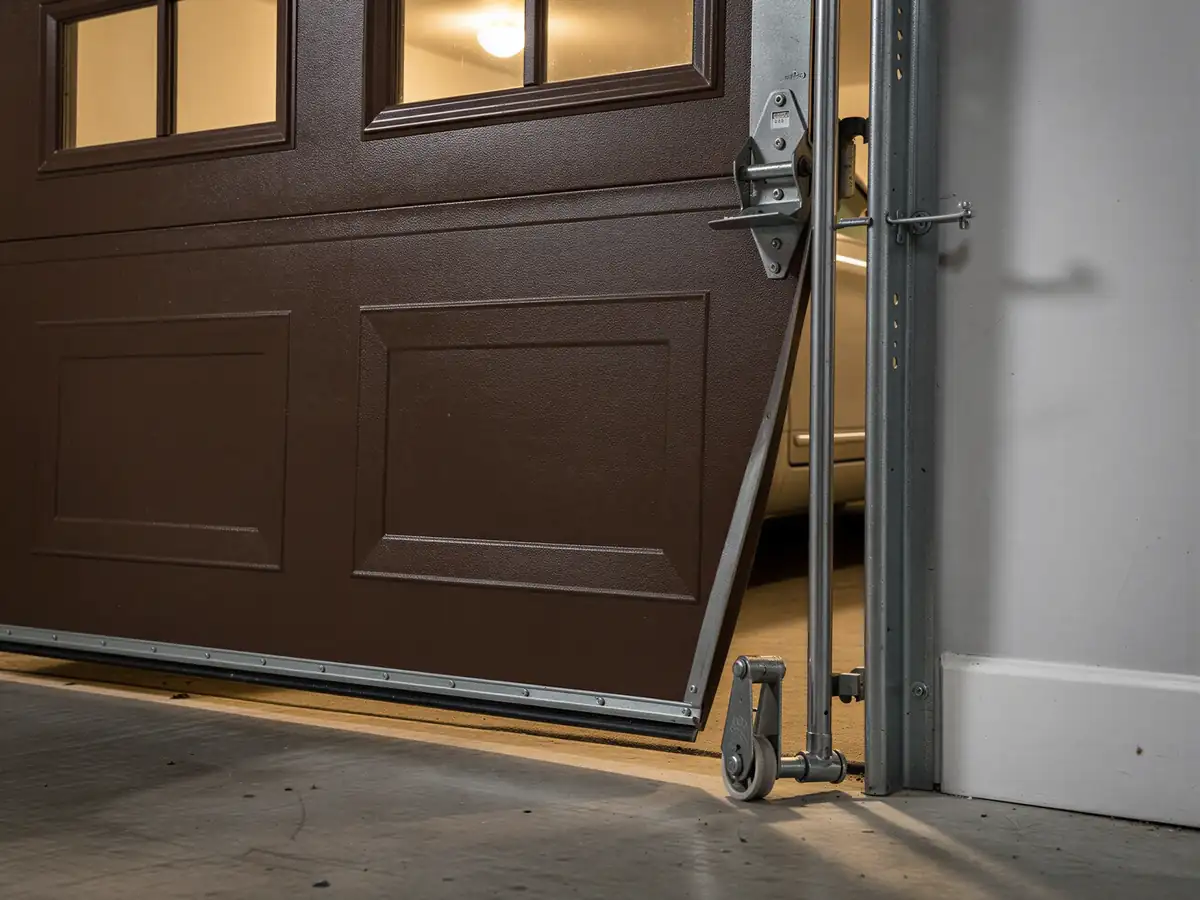
Uneven closing, where one side of the door dips lower than the other
Points to cable or track wear rather than the spring. On homes in this part of the service area, we don't see much rust-driven cable failure given the mild climate, but UV and heat cycling on vinyl-coated cable over nearly two decades still shows up as fraying at the drum.
How to Book
We cover Sienna from our base in Friendswood, about 18 miles out, so maintenance visits here get scheduled rather than handled same-day as a walk-in. If you want a straightforward tune-up - spring tension check, roller inspection, track alignment, opener gear check - that's the visit to ask for. If your opener is already struggling under load, mention that when you call so we bring the right spring stock for a heavier insulated door.
You can see what we cover for your neighborhood on the Sienna service area page, and if you're after the full rundown of what maintenance means for houses across our whole coverage area, that's laid out on the Friendswood garage door maintenance page.