The Complications
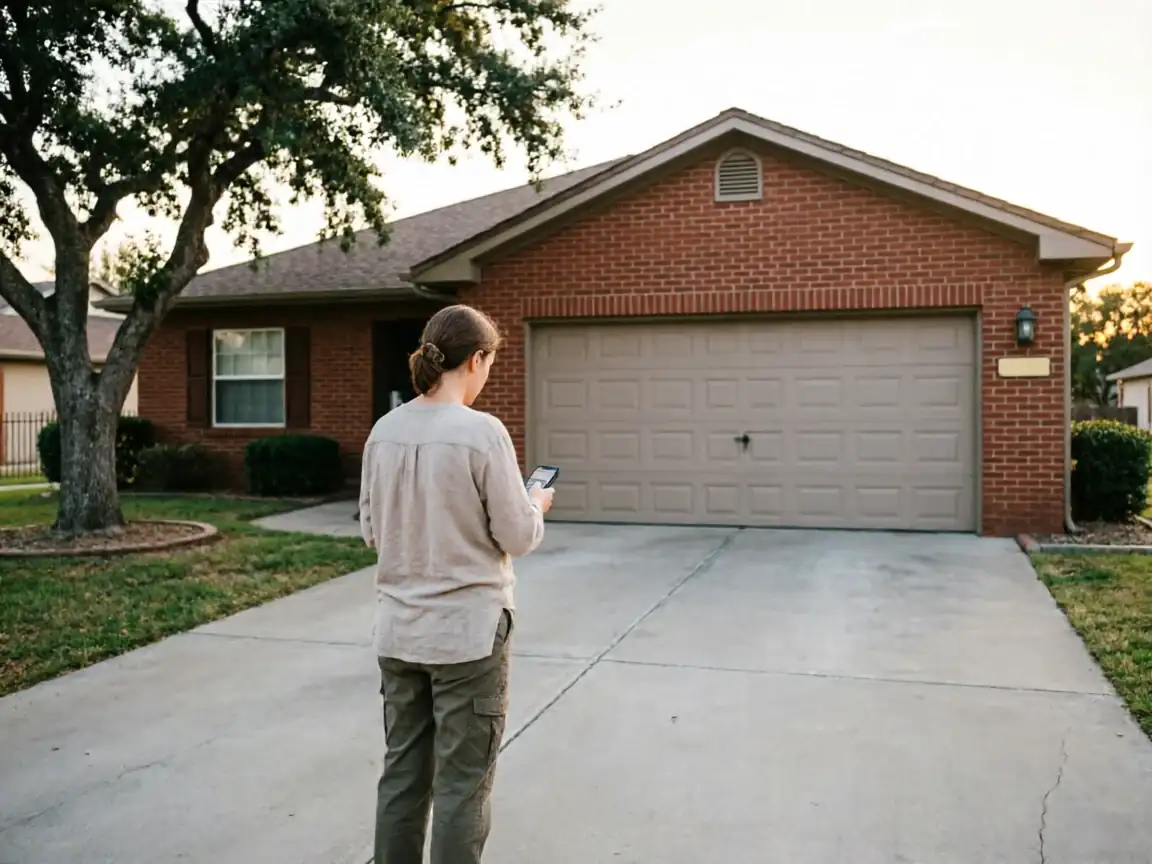
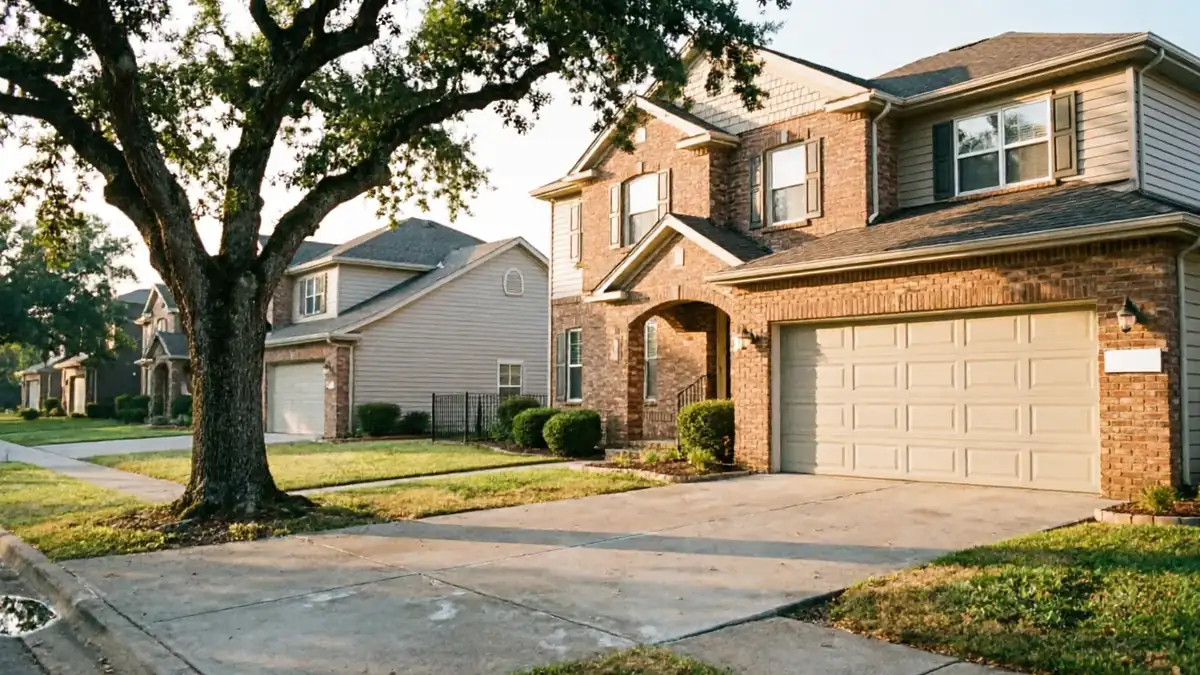
Most houses in West University Place were built right around 1991, which puts the original garage door hardware squarely in that 1980s-90s wave of construction common across this part of the service area. That means a lot of doors here are still running on whatever rollers the builder put in over thirty years ago. Nobody swaps rollers on a schedule - they get replaced when they fail, and a lot of homeowners have never had a reason to think about them until the door starts grinding on the way up.
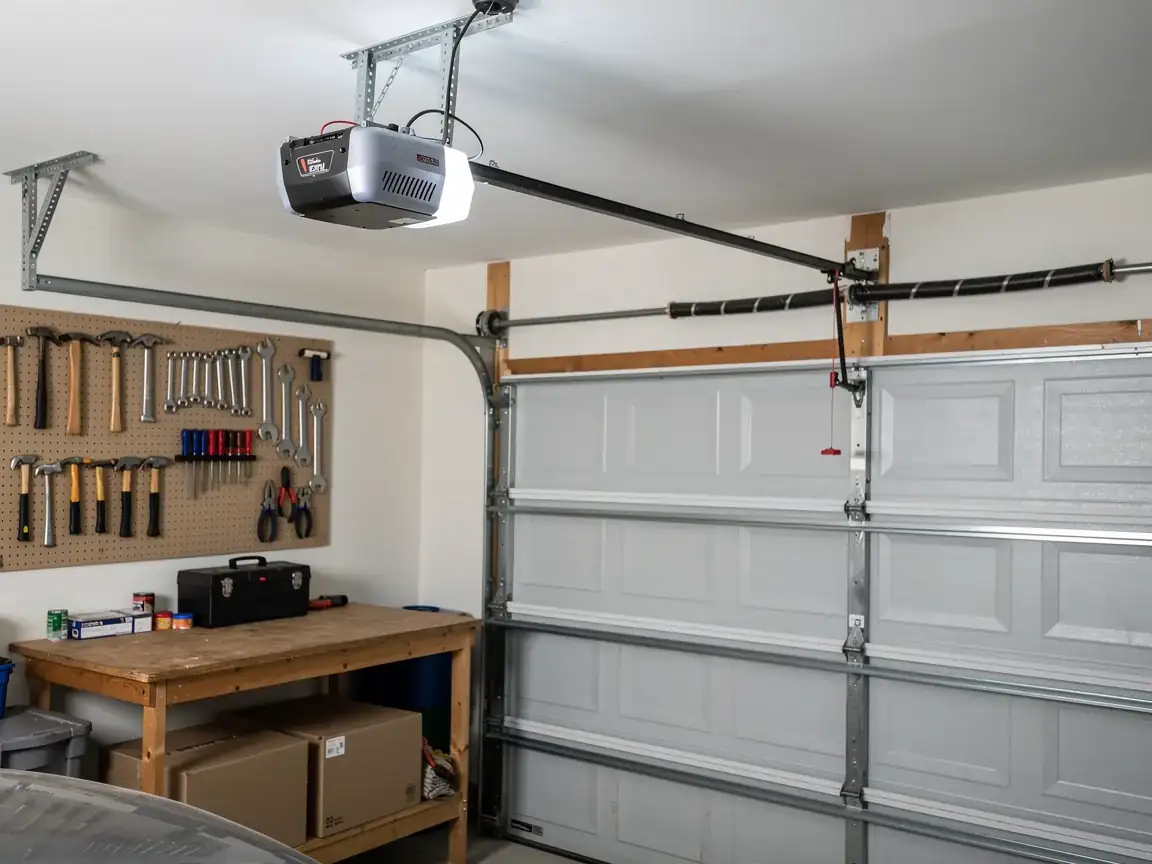
The complication isn't the roller itself. It's everything the roller has been quietly wearing against for three decades: the track, the hinges, the roller stems. When steel rollers with worn bearings sit in a track that long, they can groove the track rail unevenly, so a straight roller swap sometimes isn't enough - the track needs a look too. That's the part a homeowner calling in for "a noisy door" usually doesn't expect to hear.
What You Are Seeing
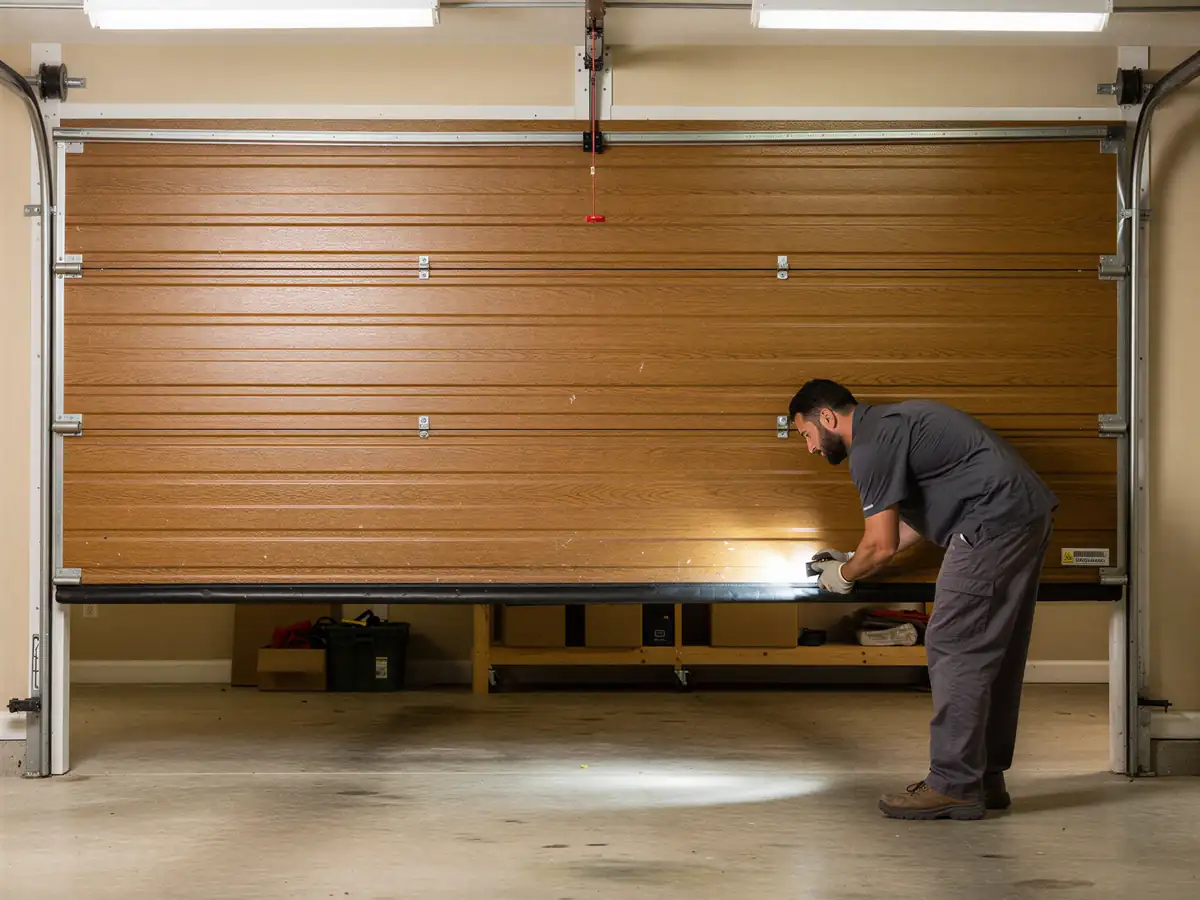
The classic sign is noise that wasn't there before - a rhythmic clunk or grinding sound timed to the door's travel, worse in the morning when everything's stiff. Original steel rollers from a 1991-era build typically ran on open bearings with no shield, so after enough cycles the bearing dries out, the roller starts to wobble in the track, and you get that off-center scrape instead of a smooth roll.
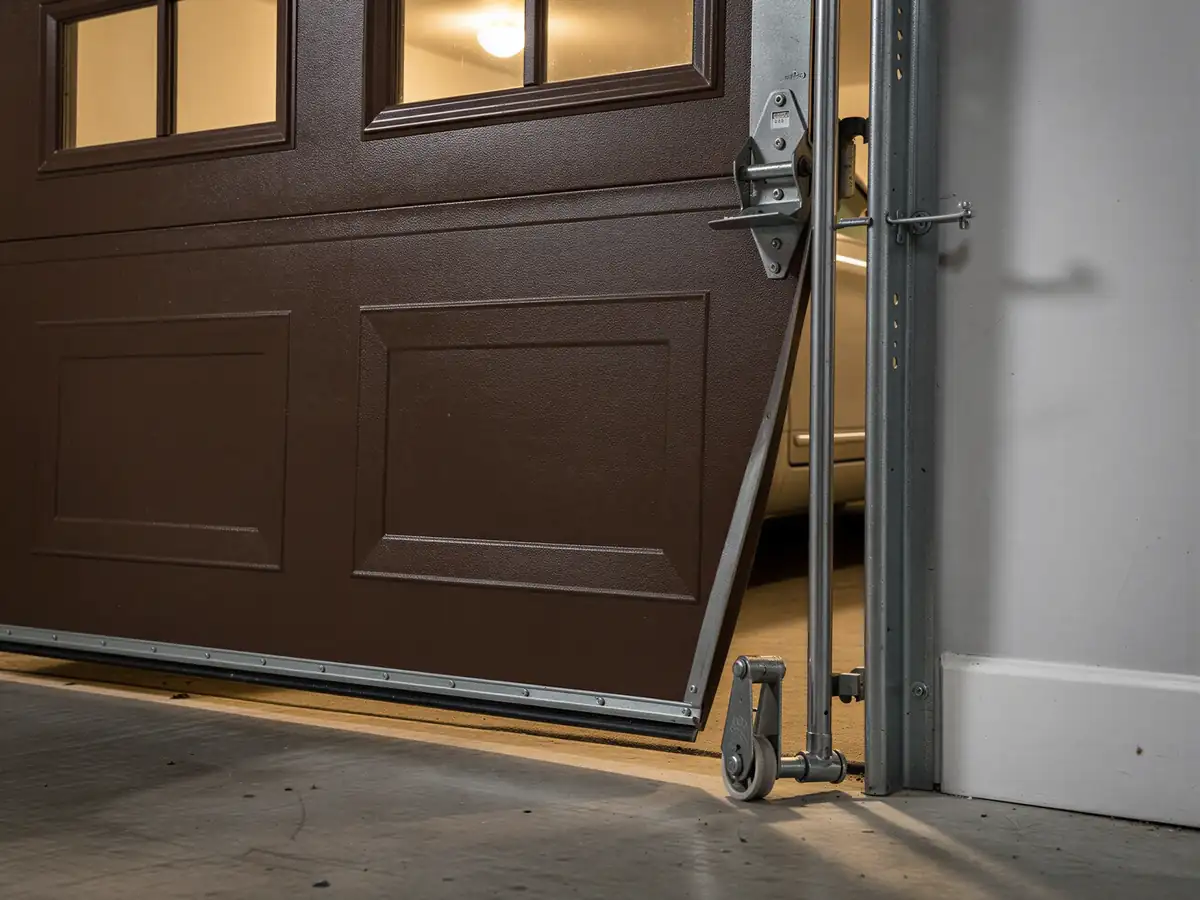
Some doors show it as a hitch partway up or down, where the door seems to catch and then release. Others just get loud enough that you notice it with the windows closed. If a roller has actually come off its stem, you'll see the door sitting crooked in the track on one side, which is a sign to stop using the opener until someone looks at it rather than keep cycling a door that's binding.
What the Fix Involves
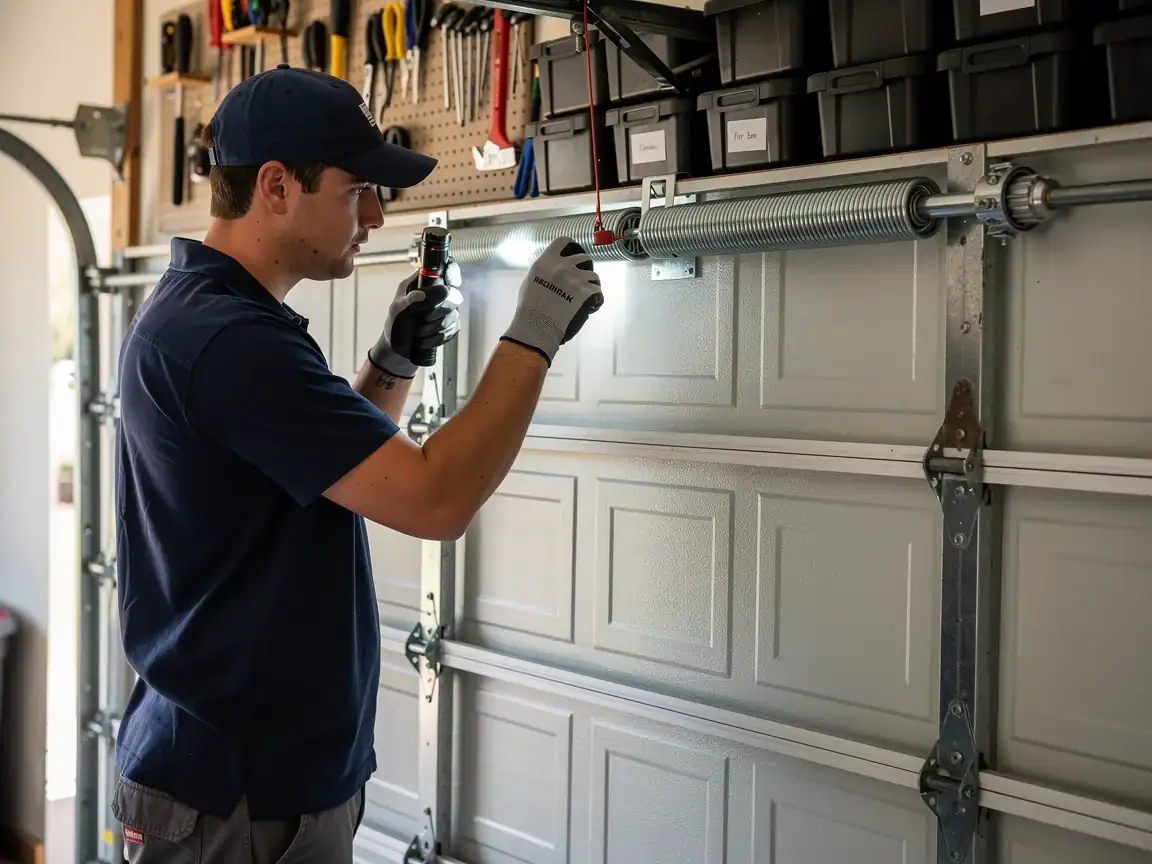
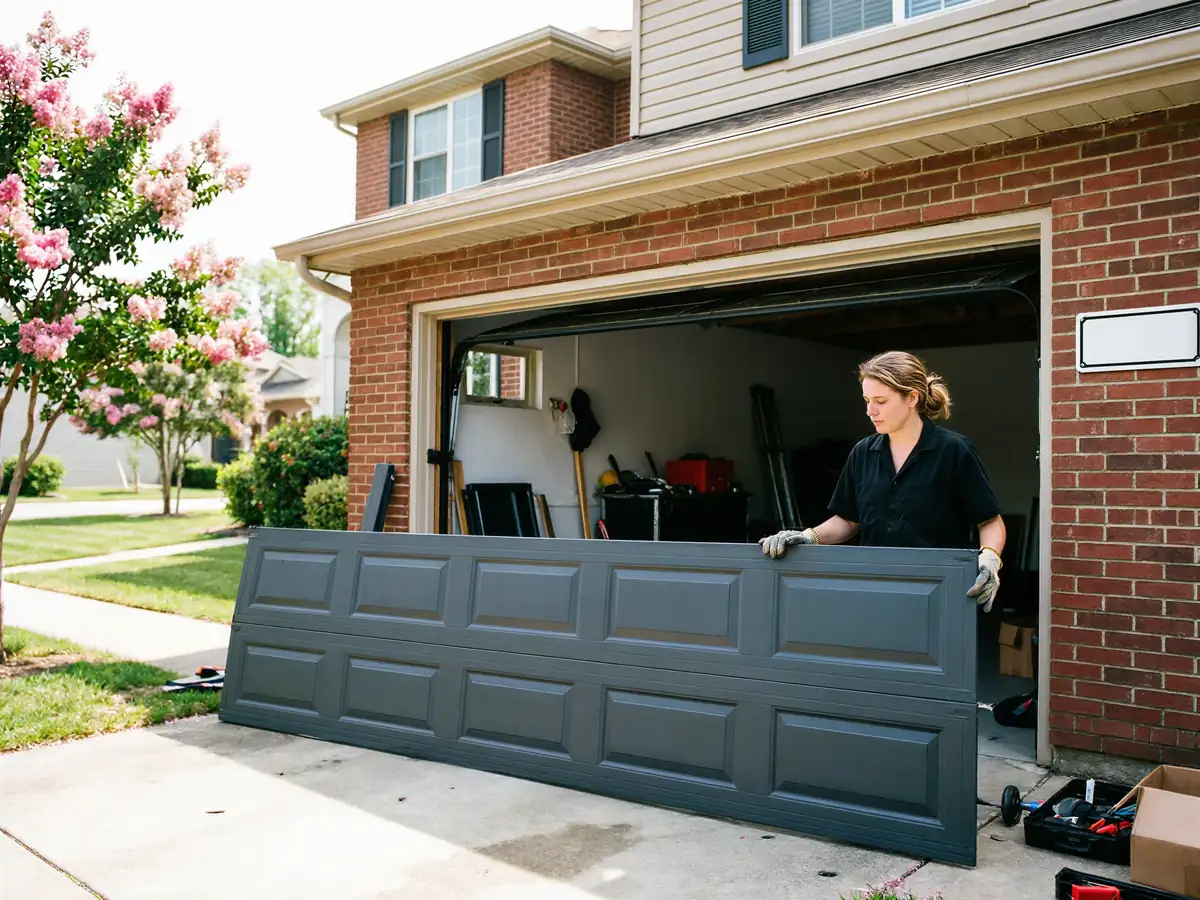
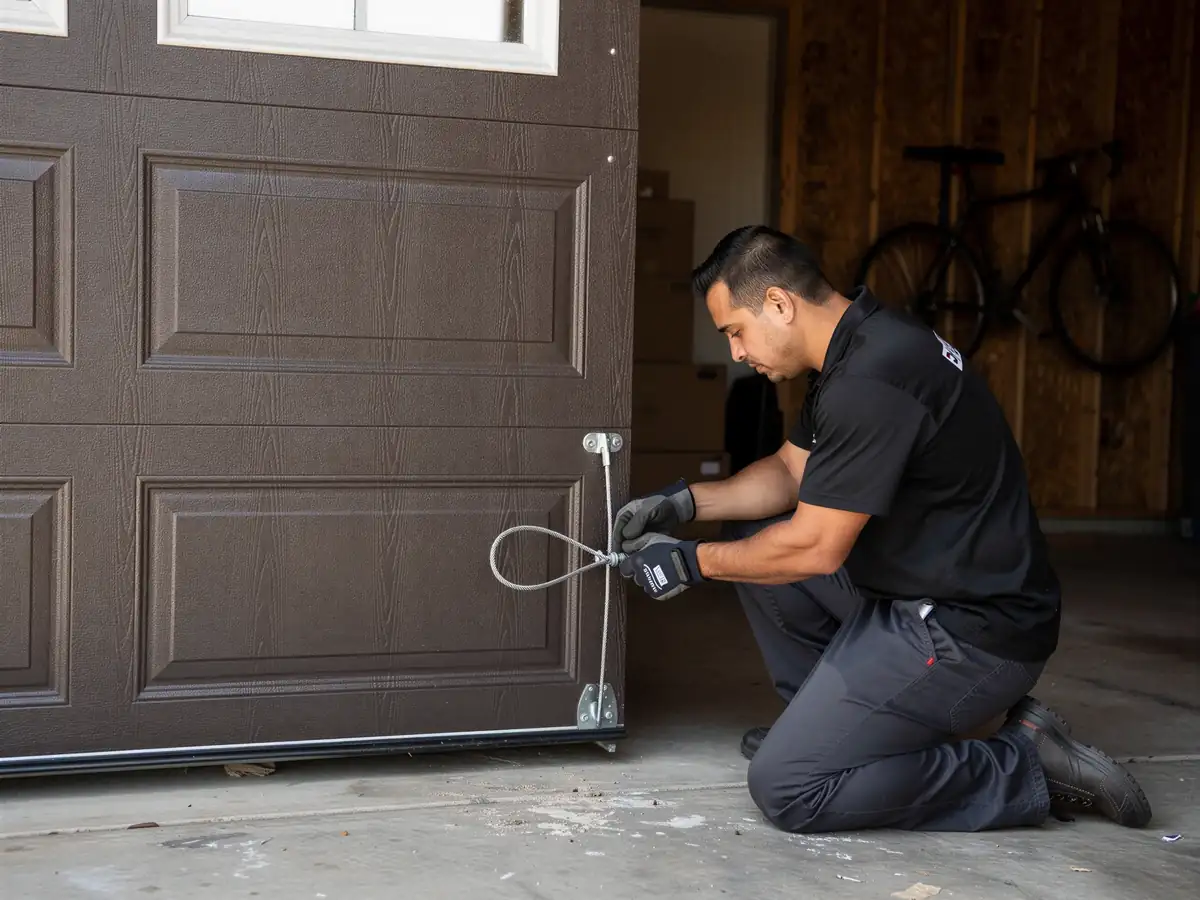
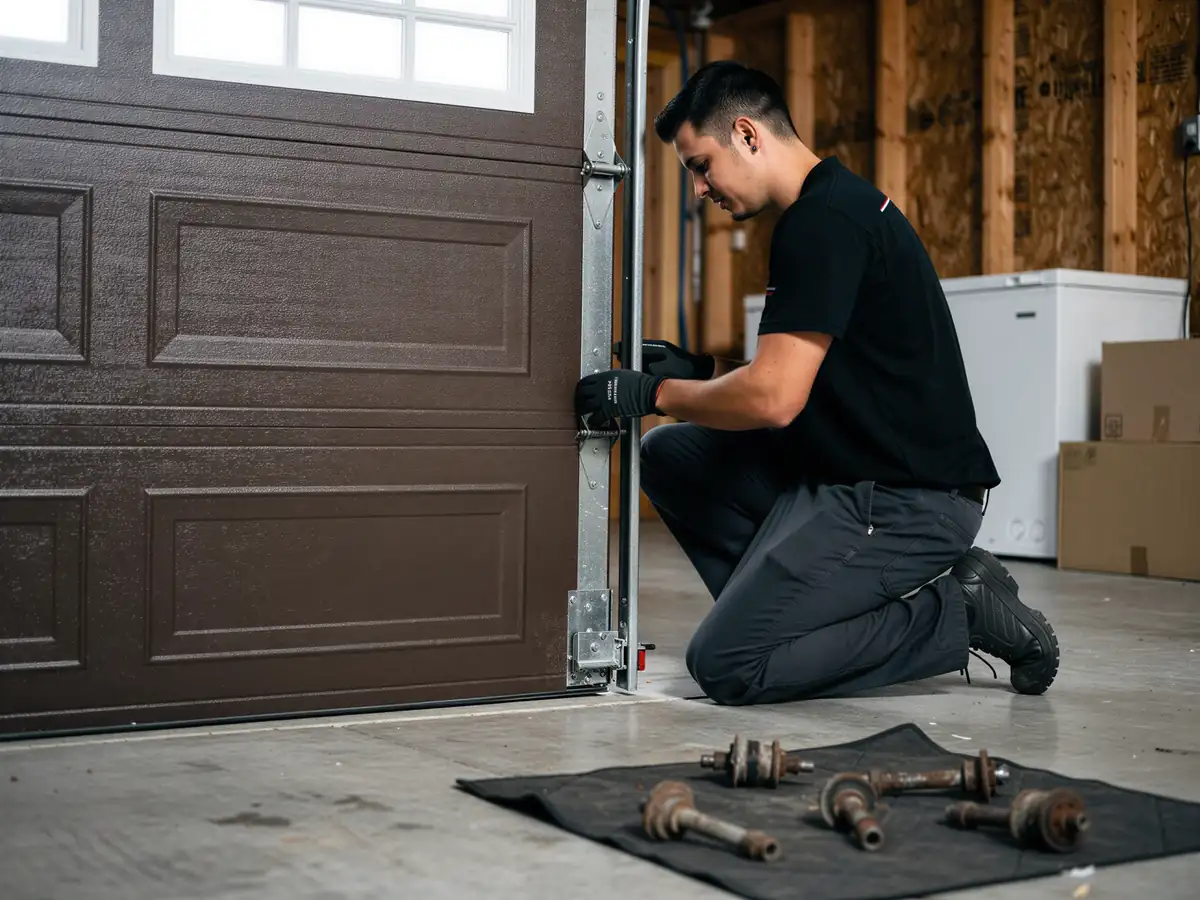
On a door this age, replacement usually means pulling every roller on both tracks, not just the one that's loudest
If one bearing dried out from age, the rest are close behind. Nylon rollers with sealed bearings are the standard swap now; they run quieter than the original steel rollers and don't need the periodic lubrication that steel ones do.
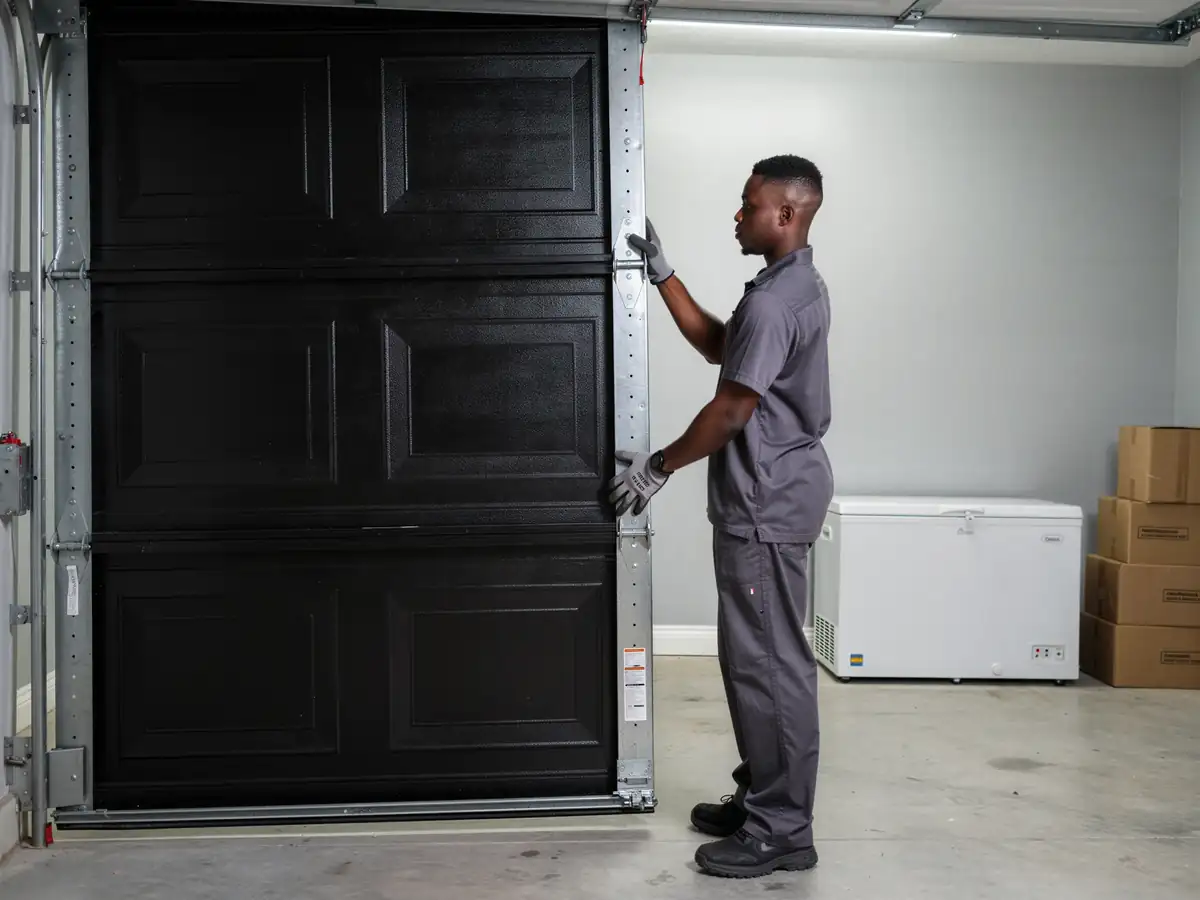
While the rollers are out, it's worth checking the track alignment and the hinges they ride through
Since three decades of wear can leave a track slightly bowed where a roller has been riding off-center. If the track's been scored or bent, that gets addressed at the same time - otherwise new rollers in a bad track will just start wearing again. This is also when a cracked or sagging hinge usually turns up, which is a separate small fix but worth doing in the same visit rather than a second trip.
What You Pay
We don't have a posted roller-replacement price for this specific job to quote here, and giving a number without seeing the door and its hardware condition wouldn't be honest. What drives the cost is mostly how many rollers need replacing, whether the hinges or track need attention at the same time, and which roller style you choose - steel is cheaper up front, sealed nylon costs more but runs quieter and lasts longer.
Worth noting: in a lot of the homes we see in this area, the household budget supports choosing the quieter nylon option over patching with cheap steel, since the price difference between the two is small relative to the job itself. That's a call for the homeowner, not something we push either way.
Time on the Job
A full roller set on one door, done on its own, is a same-visit job - it doesn't require ordering parts that sit on a truck already stocked for this kind of call. Where it runs longer is when the track needs straightening or replacing alongside the rollers, since that's more disassembly and more care getting the door running true again afterward.
We travel to West University Place from Friendswood, about 20 miles out, so the appointment window accounts for that drive - it's not a same-hour walk-in kind of job, but once the truck's on site, the roller work itself moves fast.
Why It Happens Here
The climate here is mild with occasional freezes, not the kind of swing that cracks hardware outright
But cold snaps do stiffen old grease on steel roller bearings, which is often what finally turns a slightly worn roller into a loud one. It's less dramatic than what houses in harsher climates deal with, but it still pushes aging hardware over the edge.
Combine that with a housing stock where most doors are original to a 1991-ish build
And the pattern is straightforward: these are first-generation rollers reaching the end of a long, slow wear cycle at roughly the same time across a lot of houses built in the same few years. It's not a defect - it's just hardware that's done its job for three decades and is due.