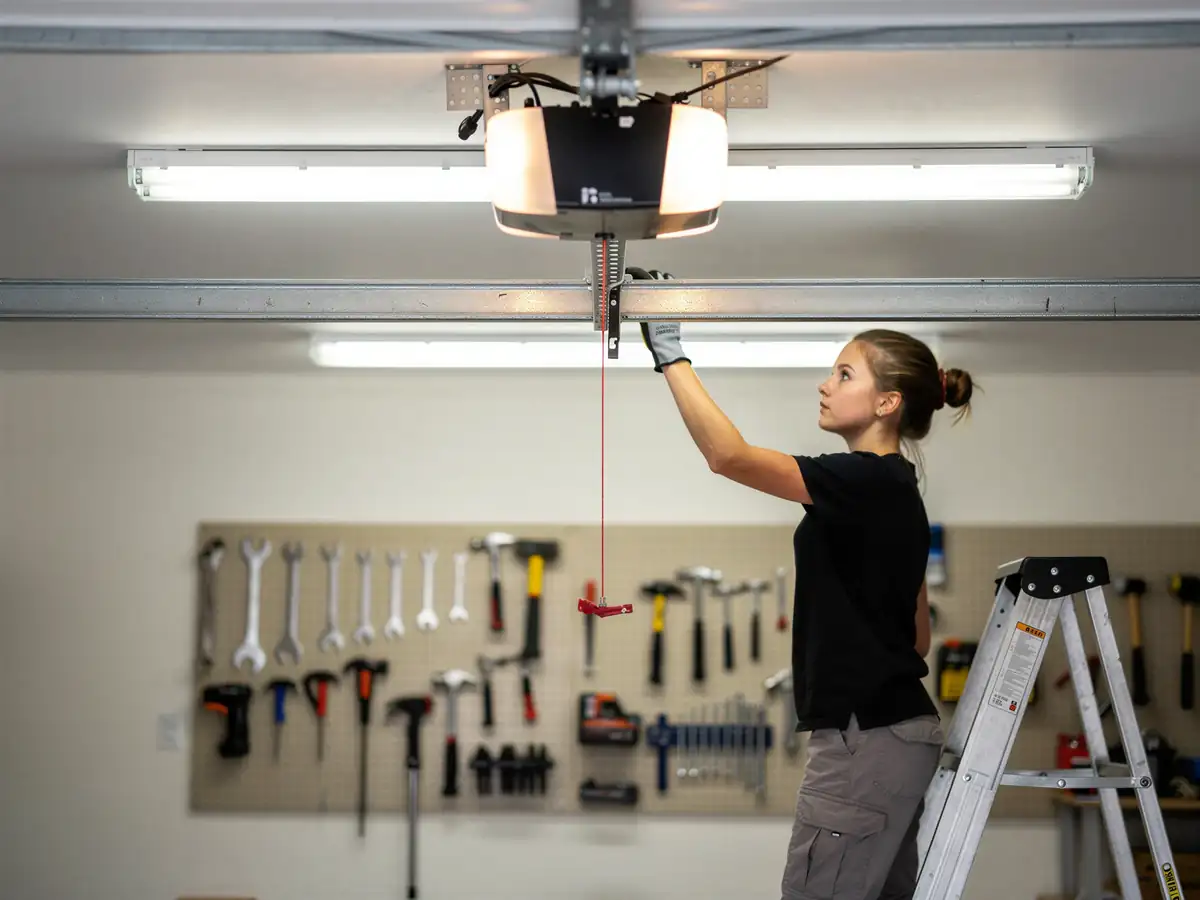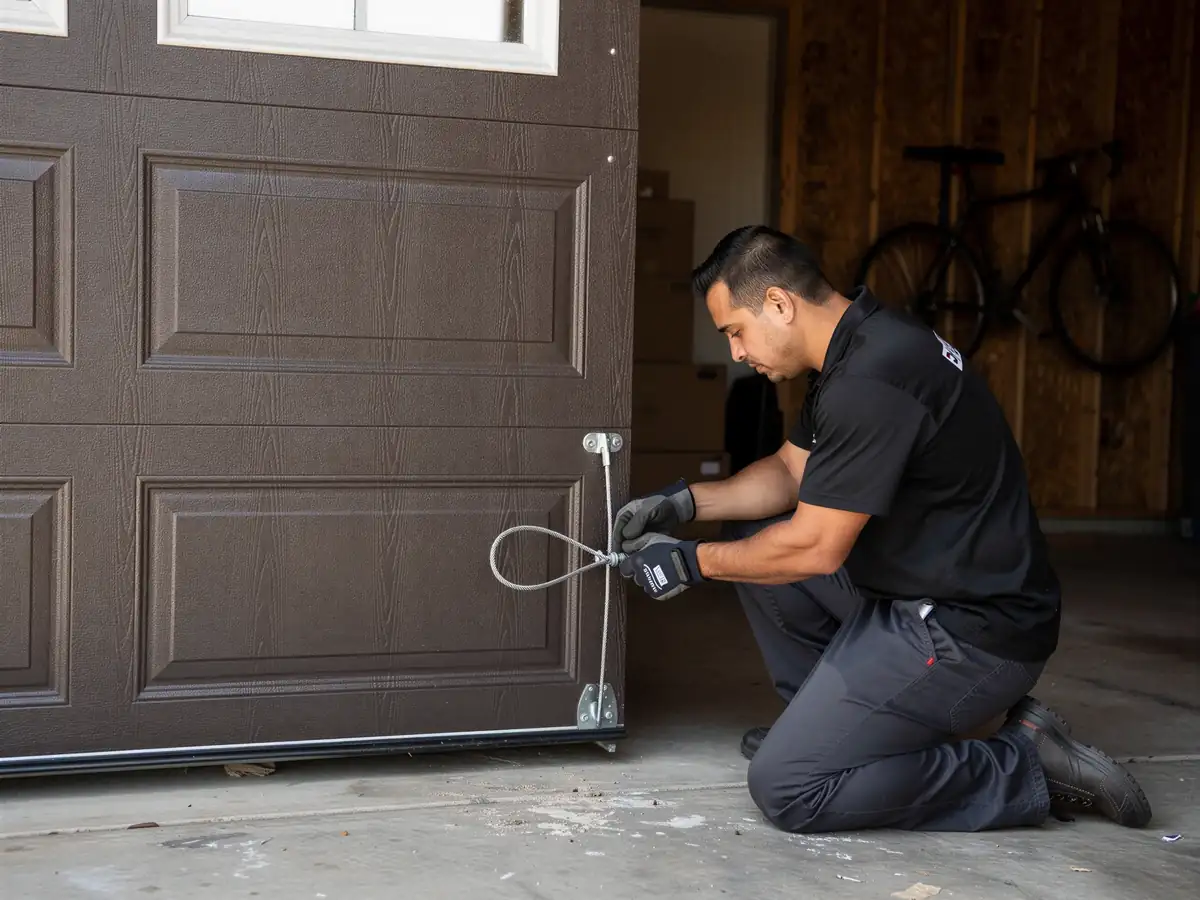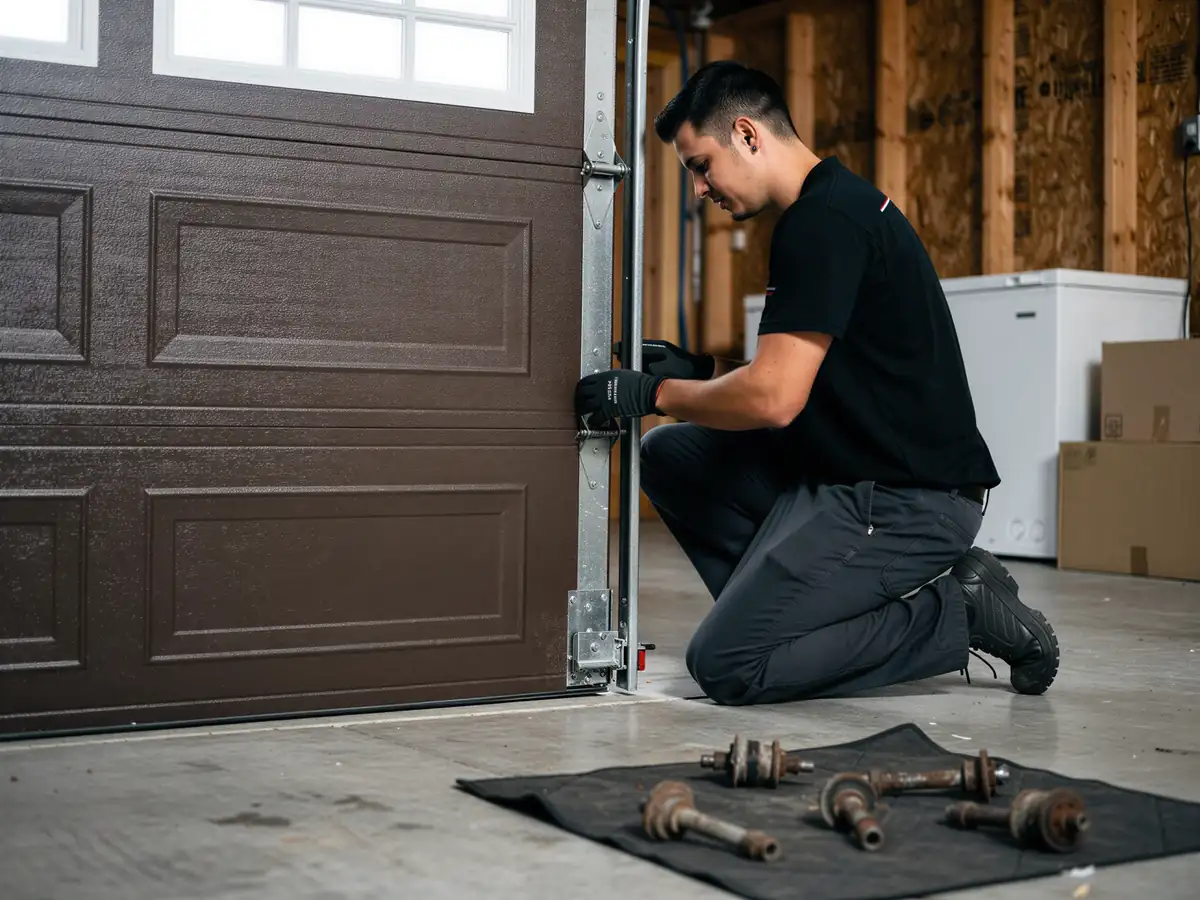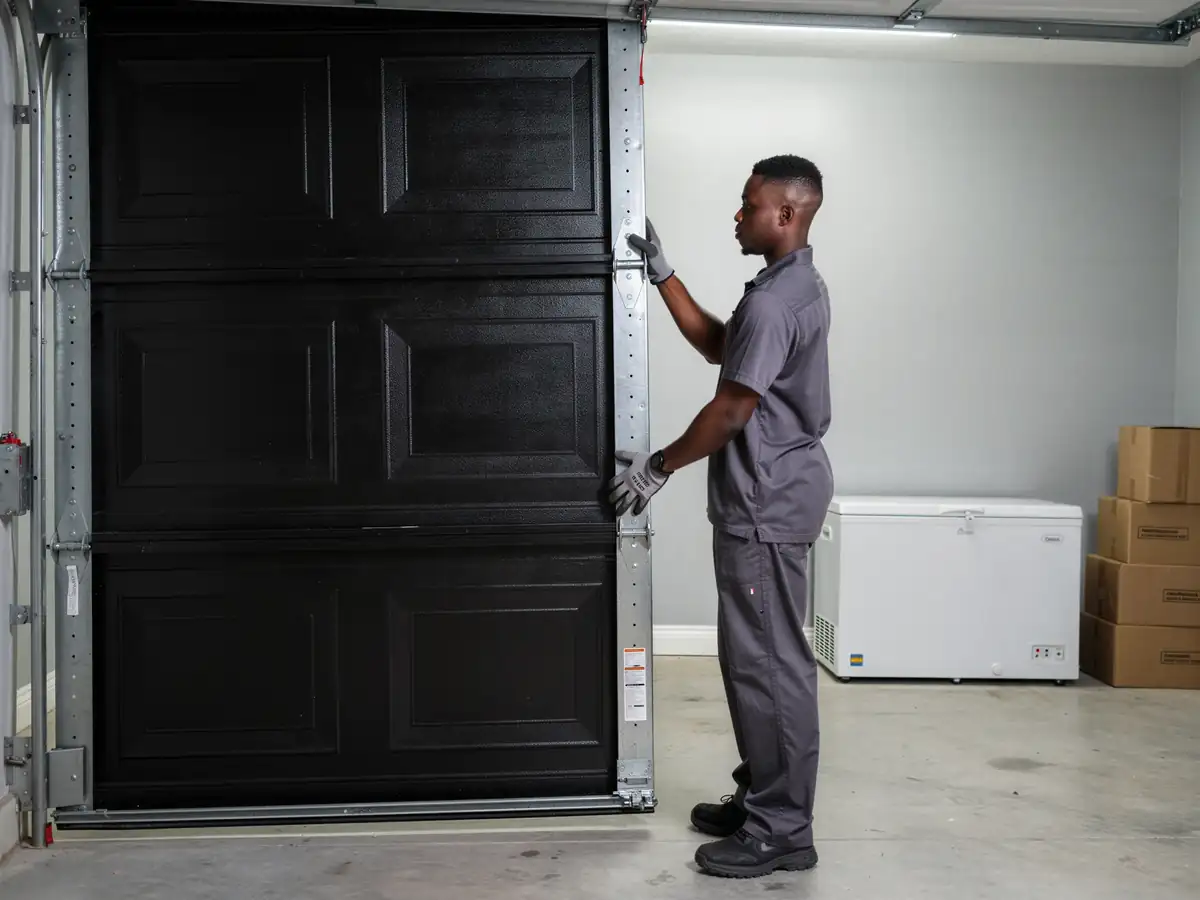
What You Are Seeing
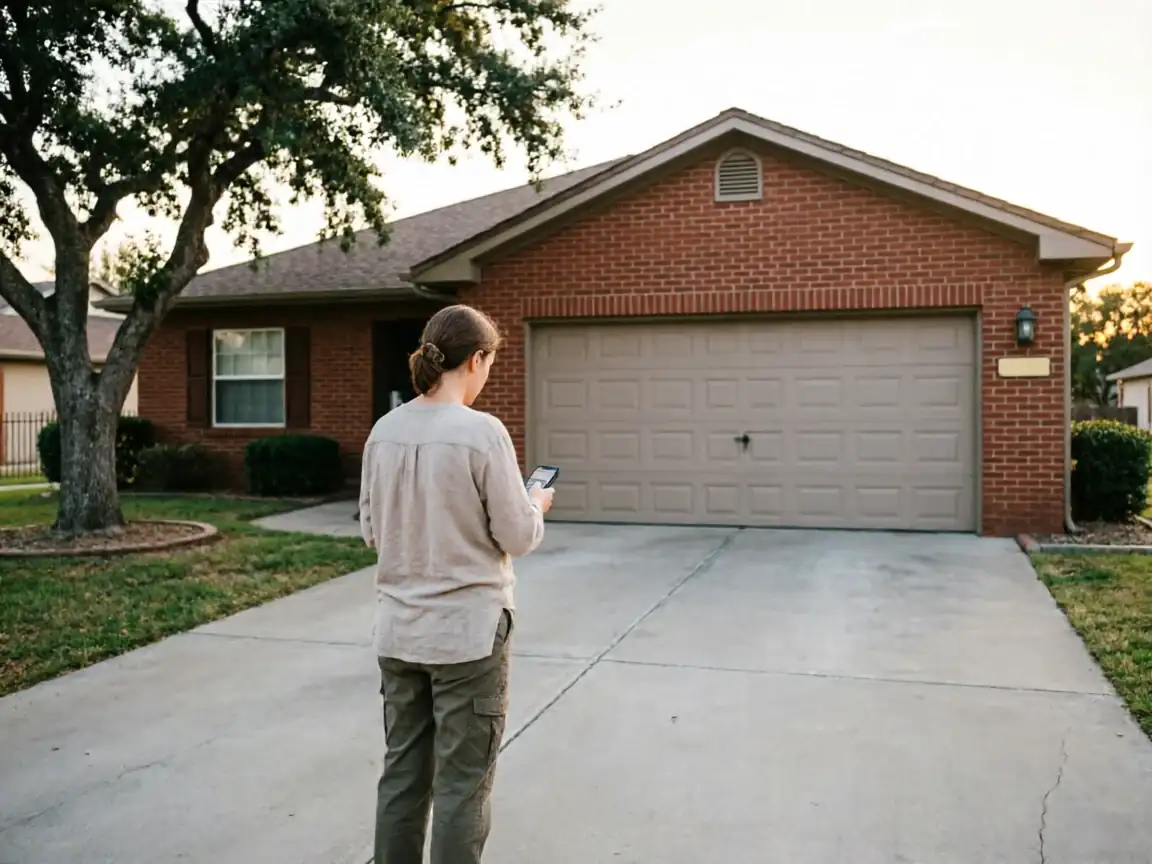
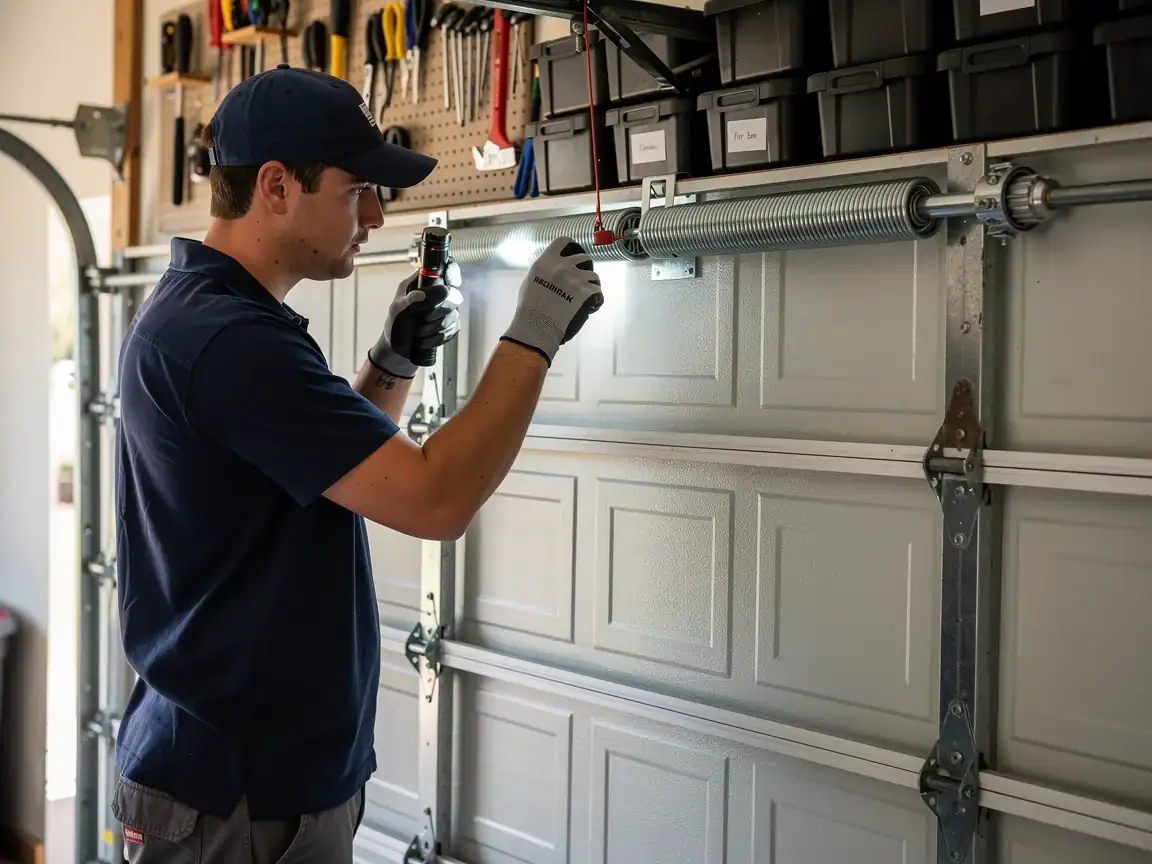
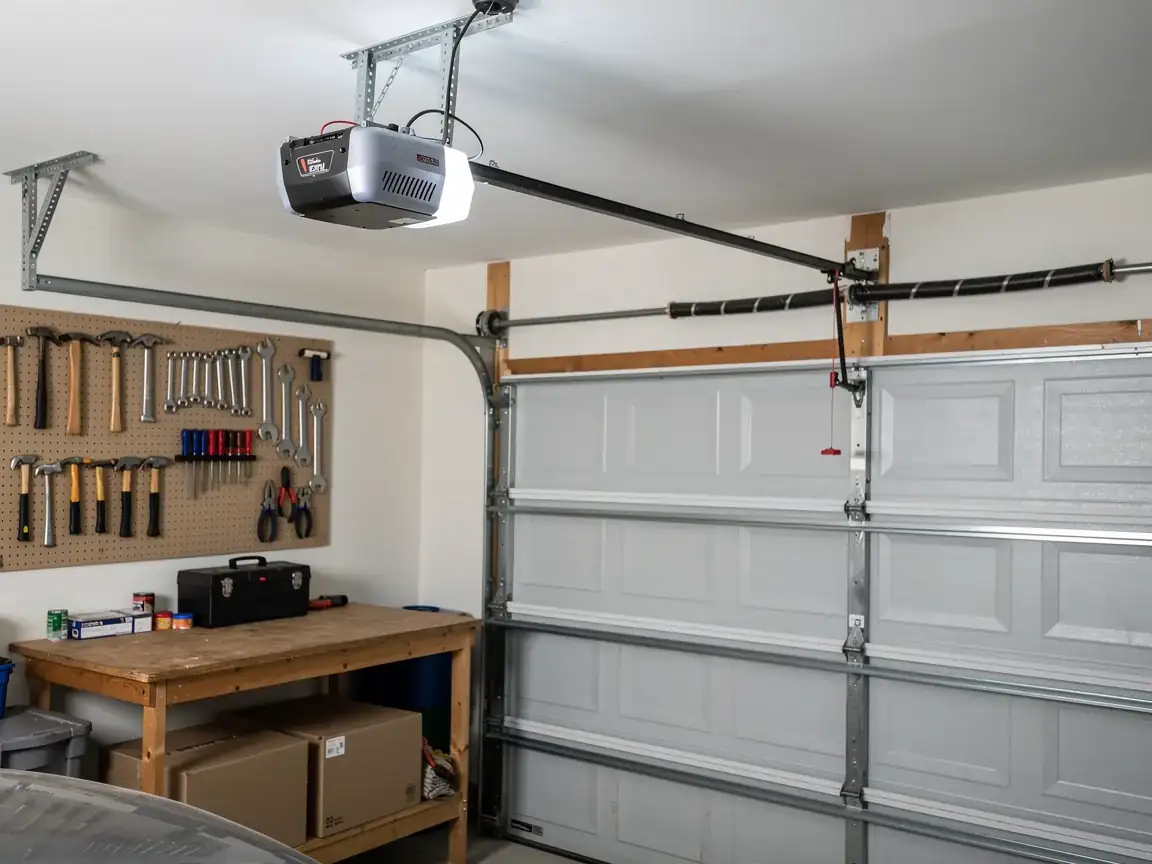
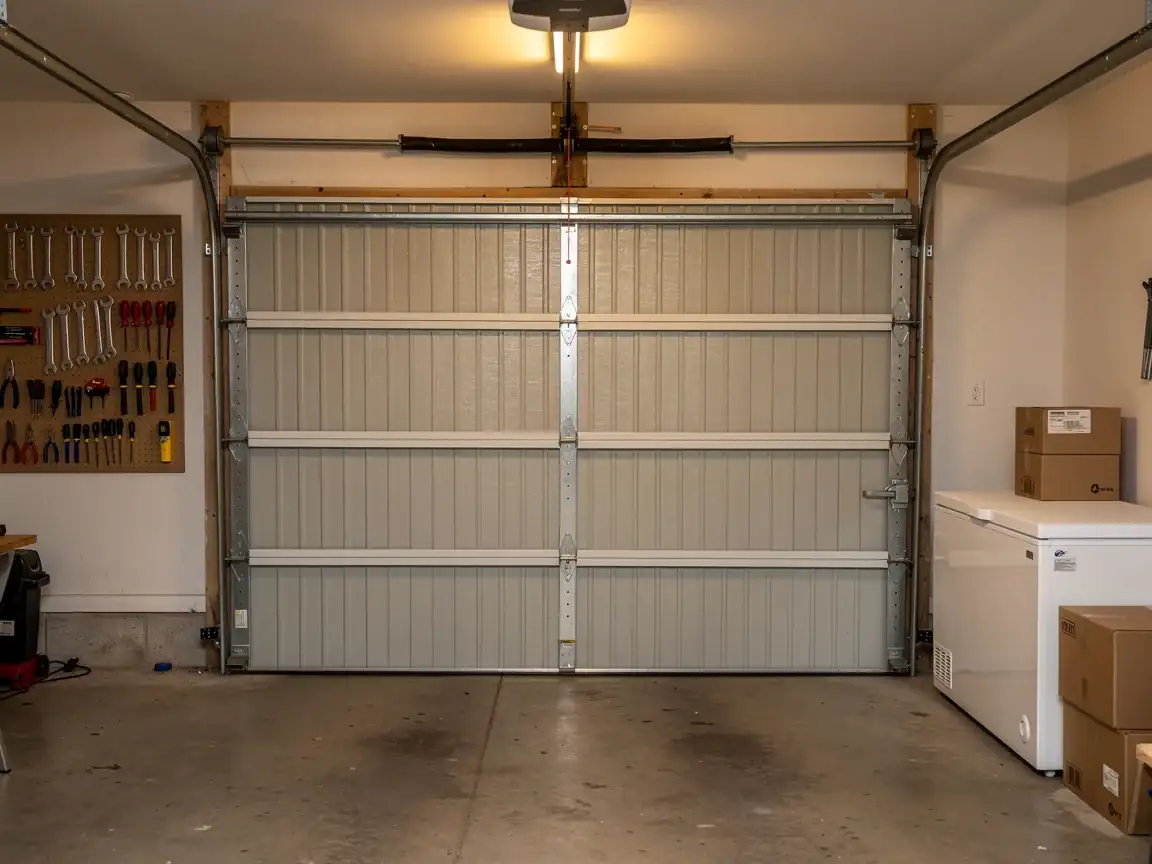
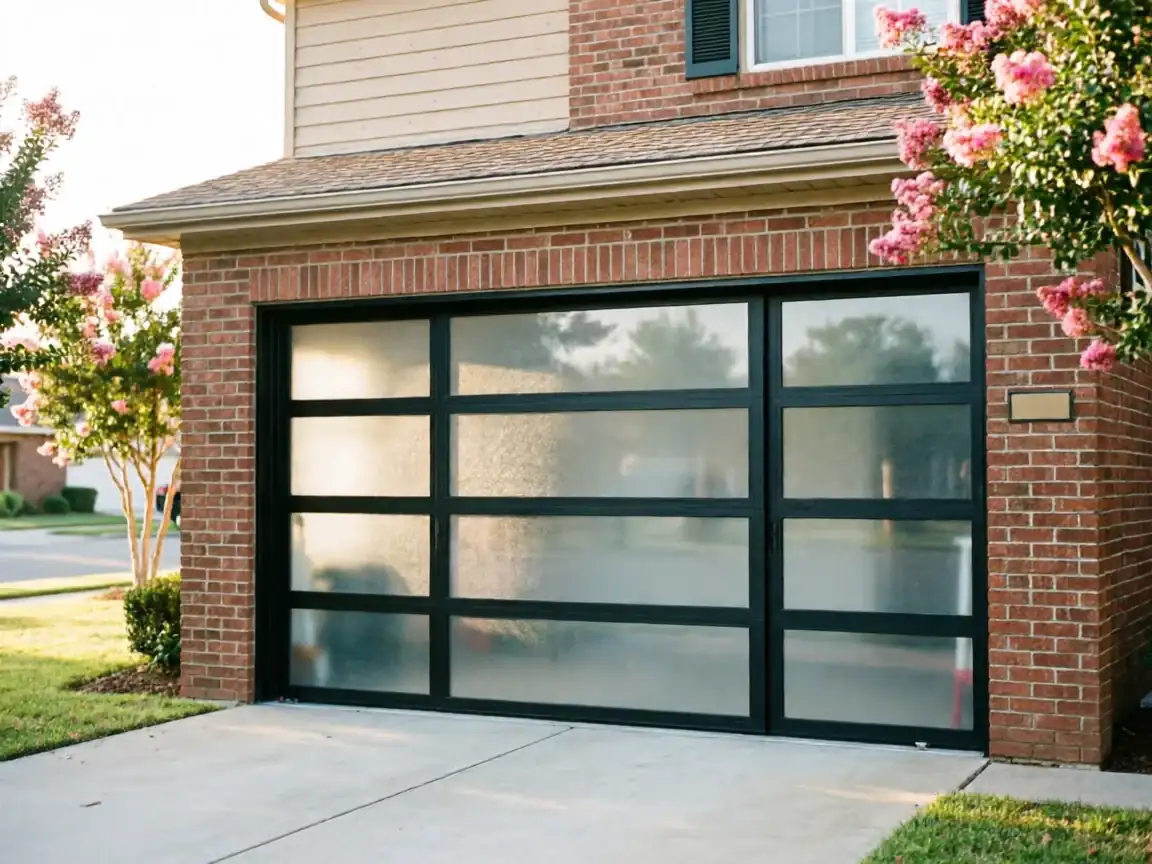
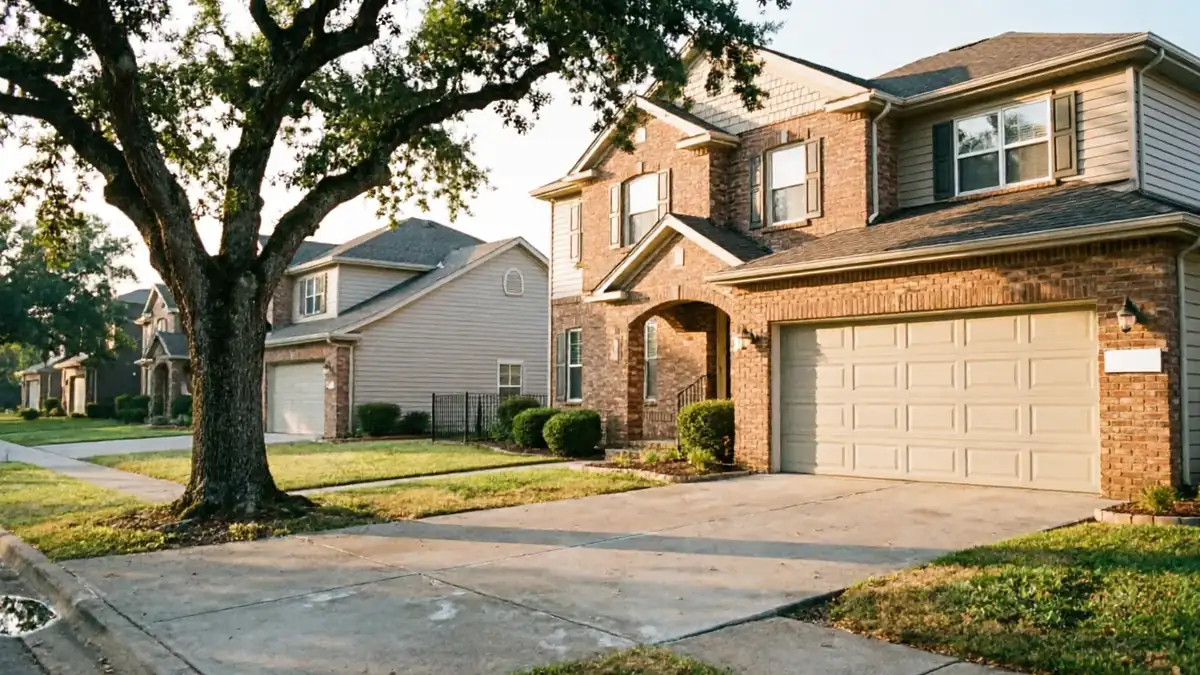
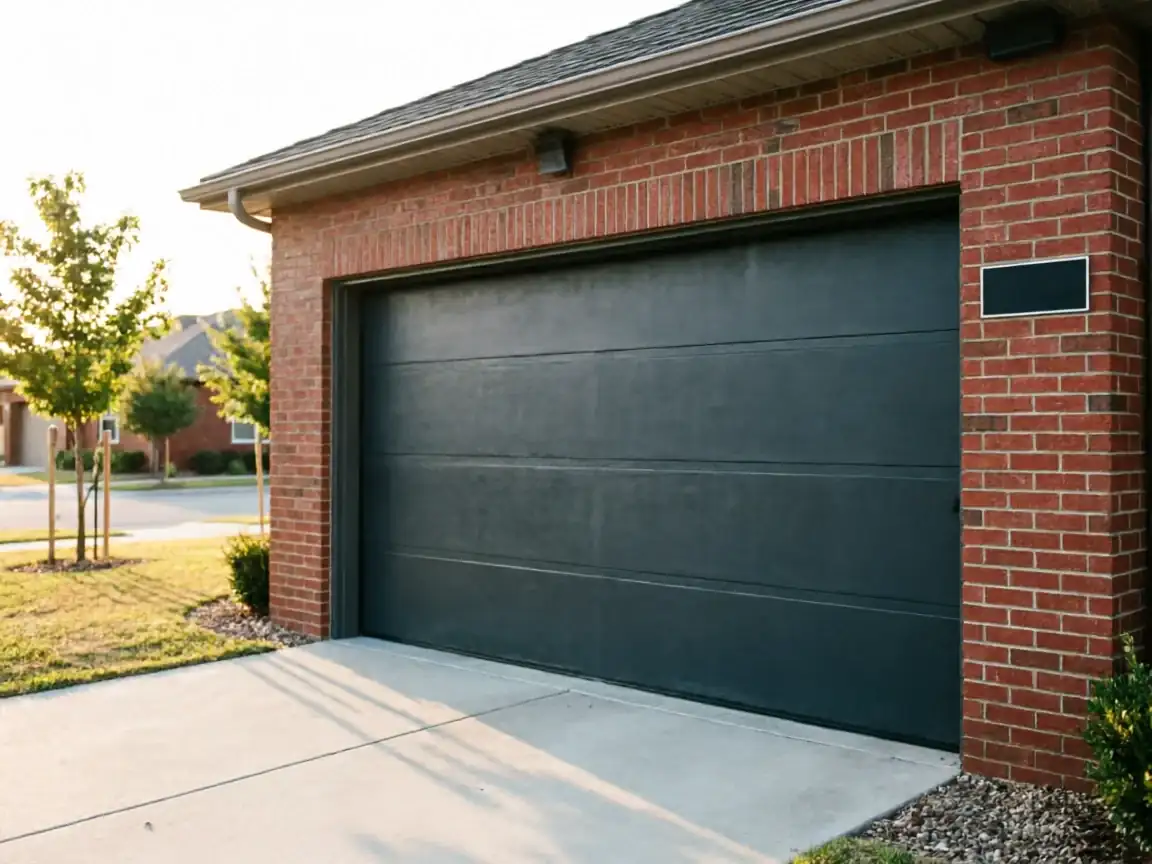
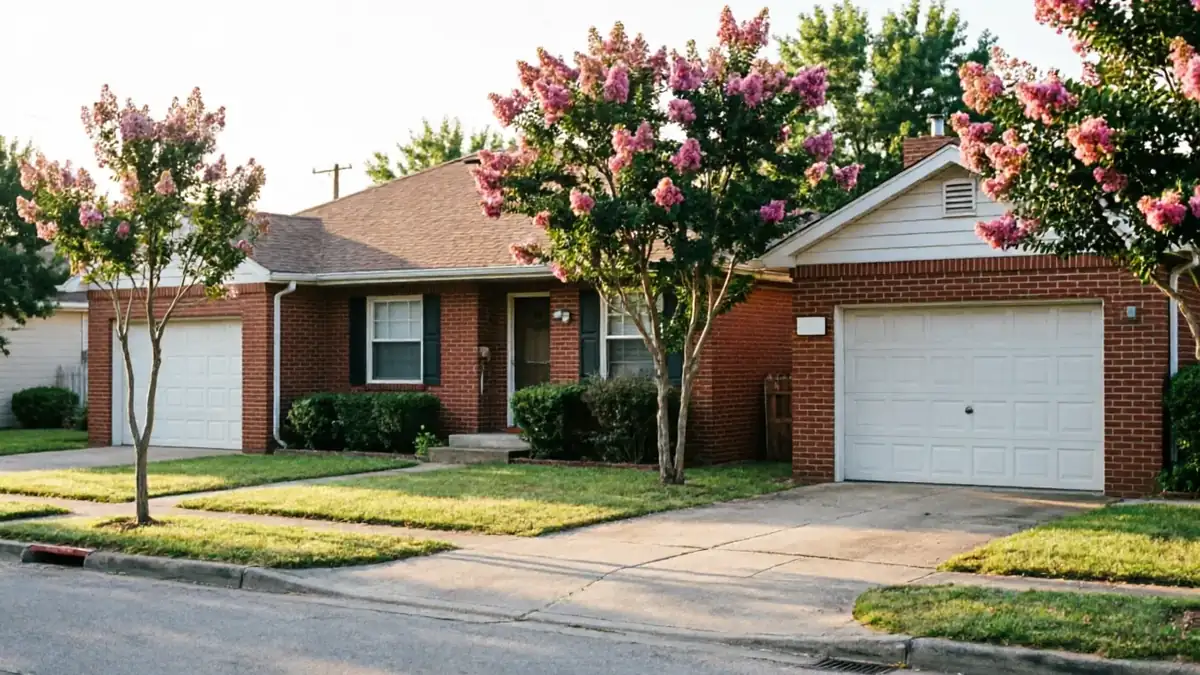
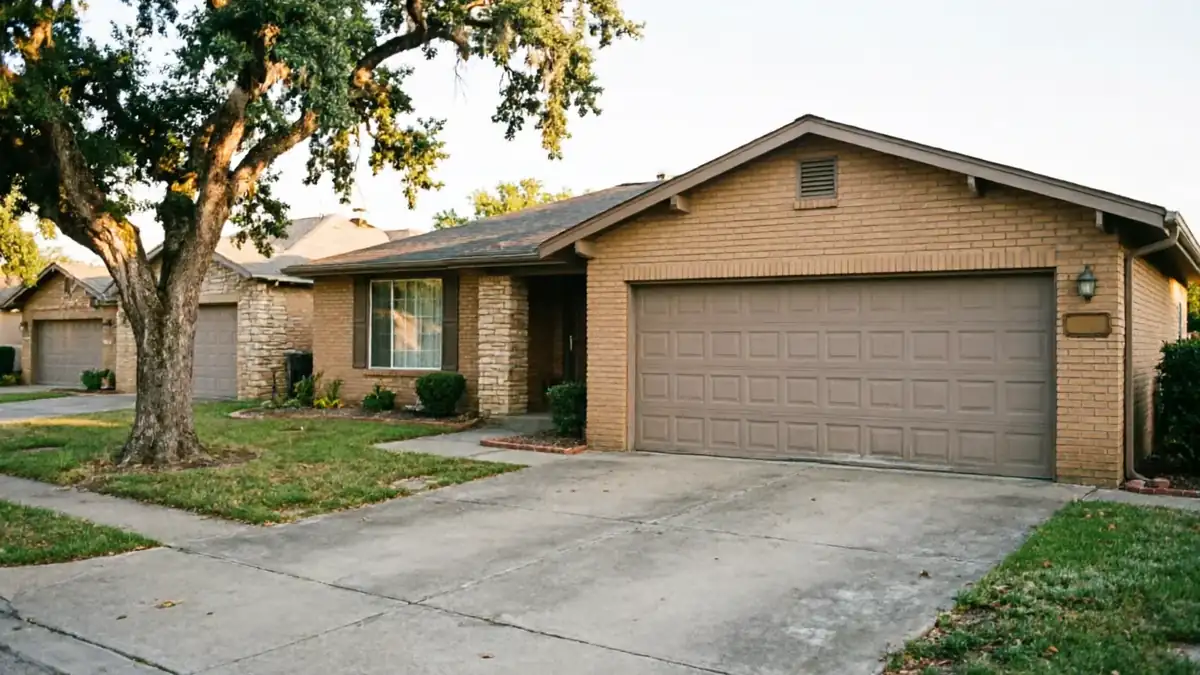
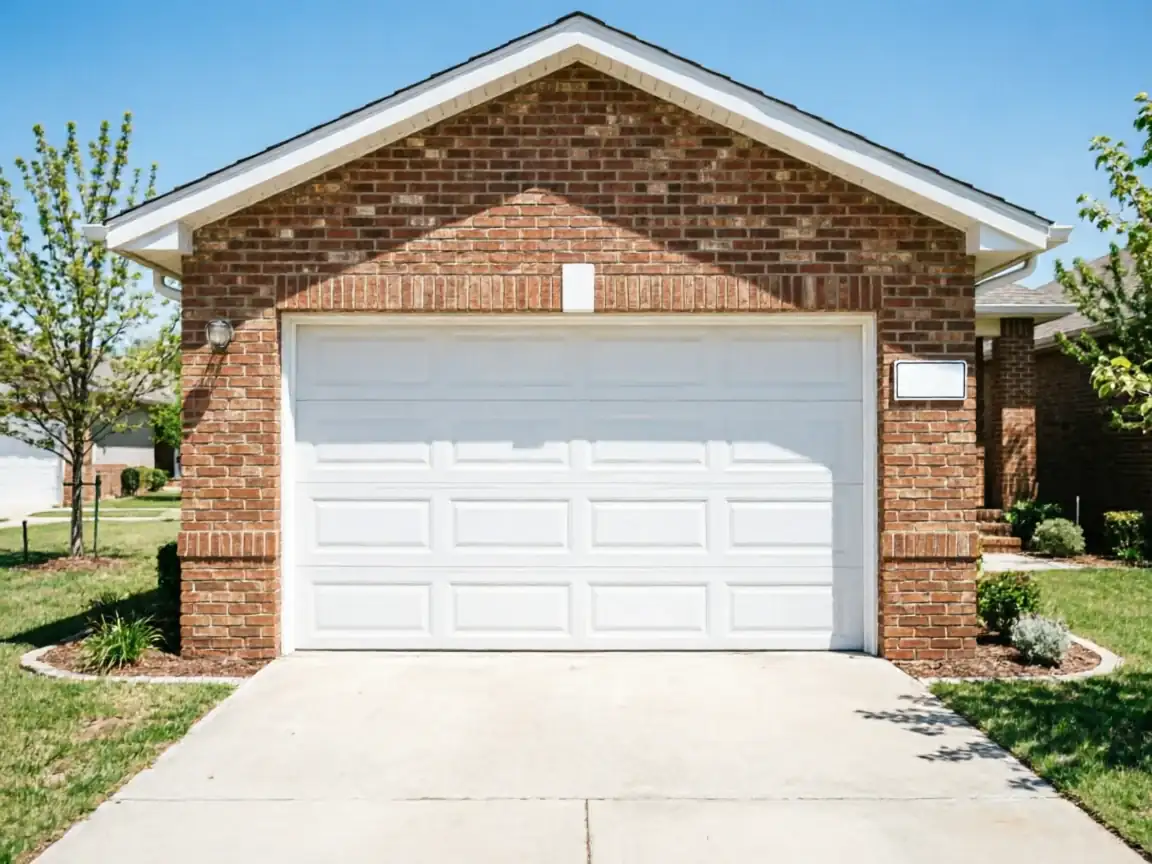
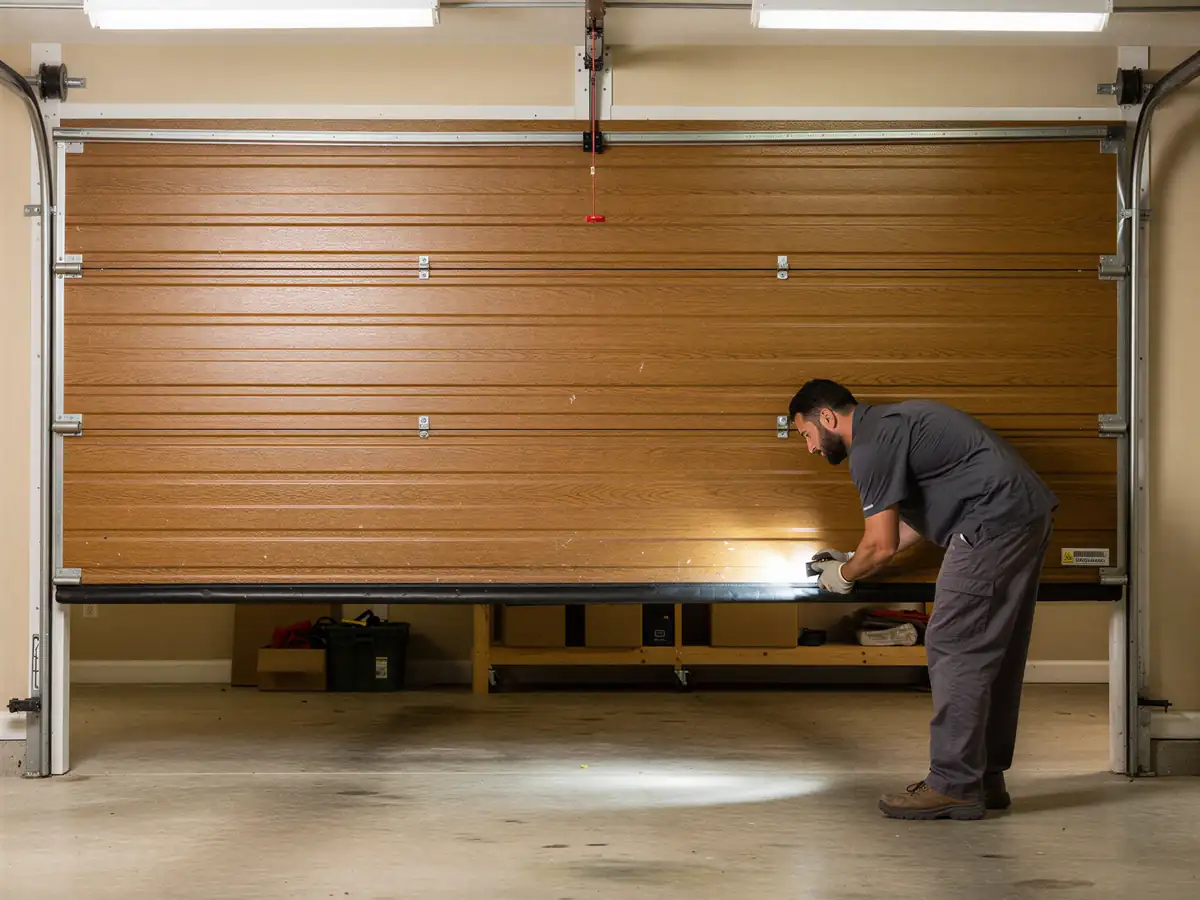
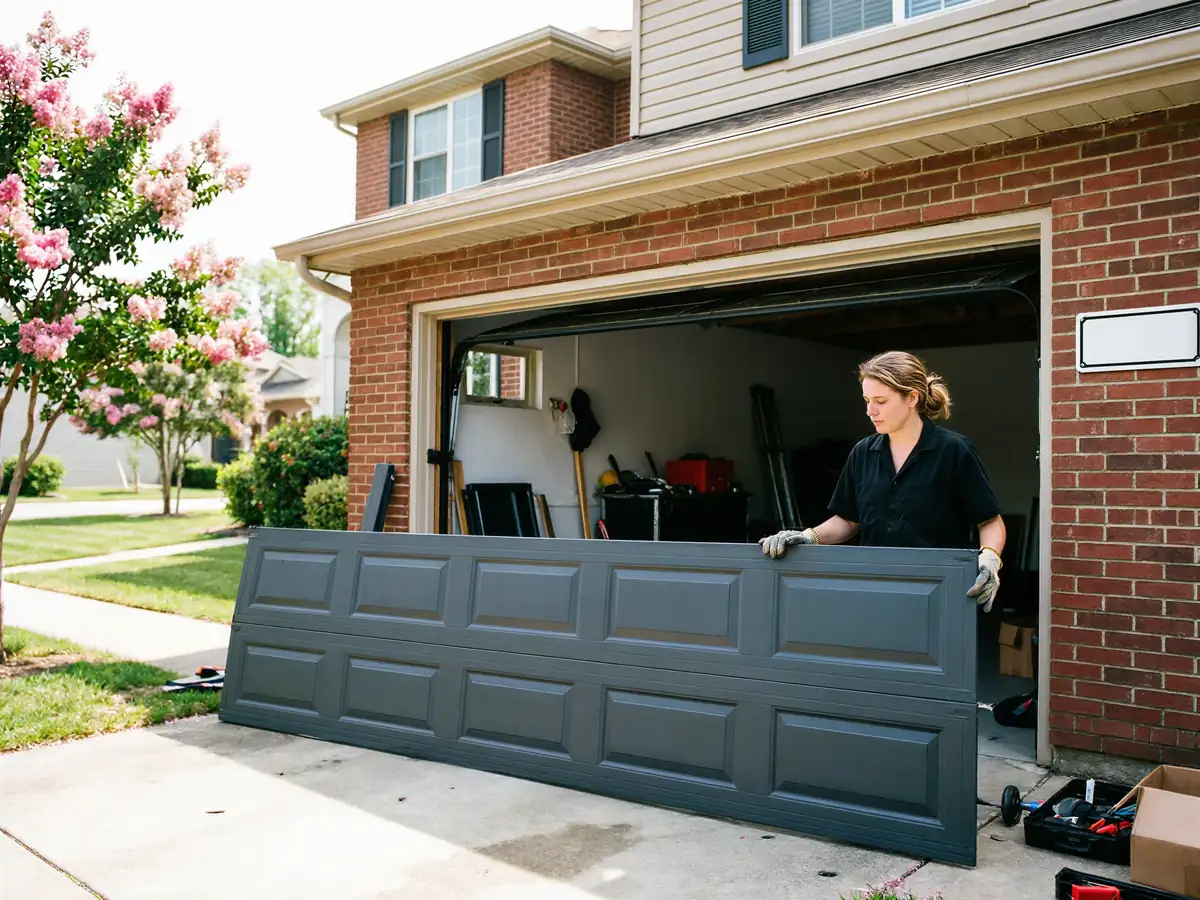
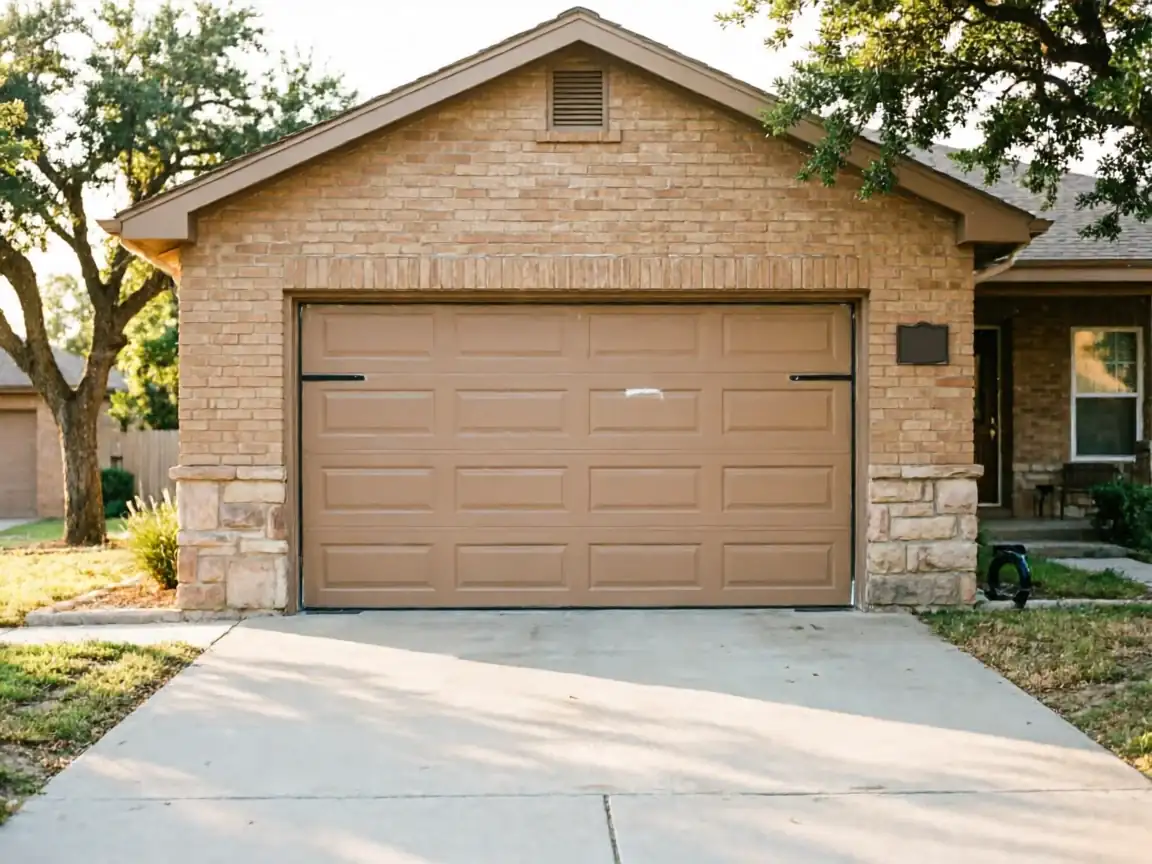
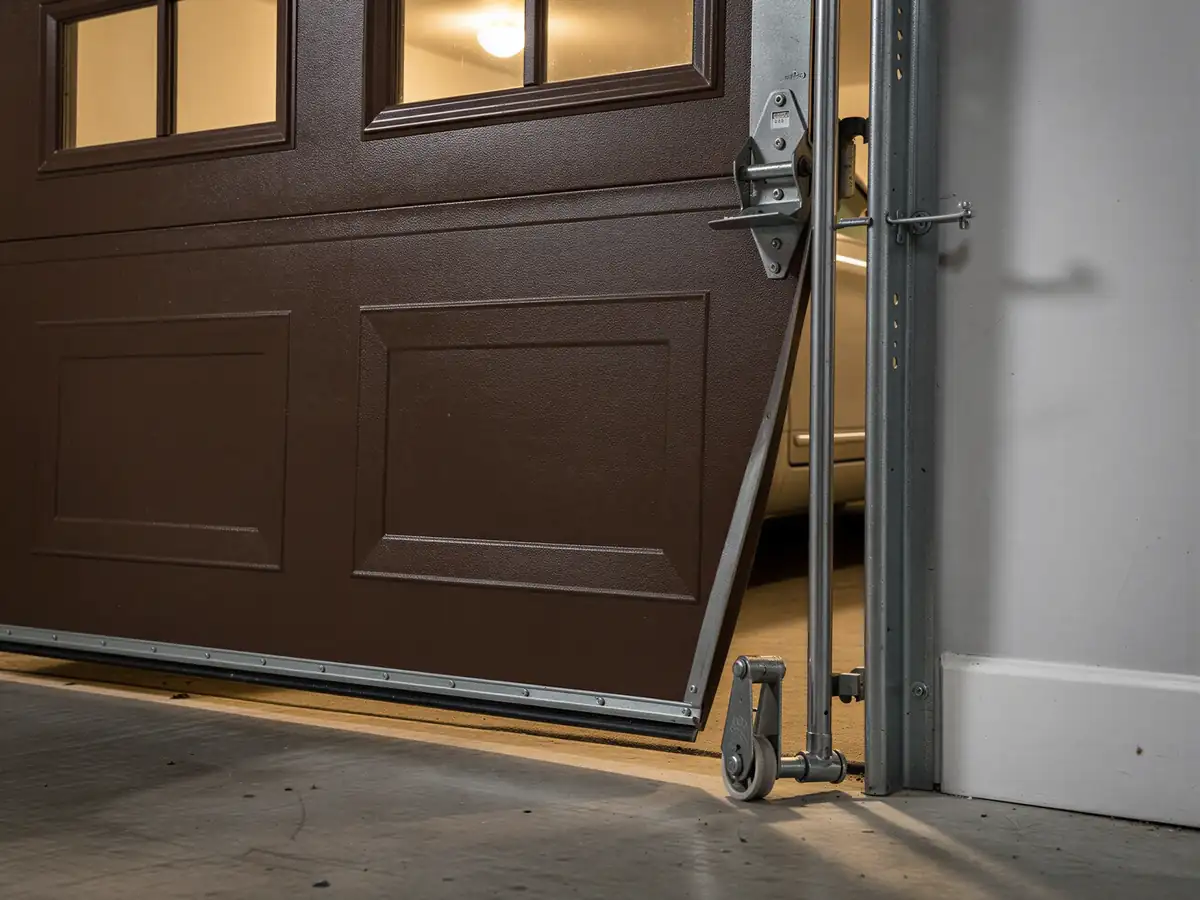
Deer Park's housing stock, mostly put up in 1981, means these are steel sectional doors on galvanized track that have had four decades to work loose. Most are single-layer steel panels, either a 16x7 double or a 9x7 single, hung on roll-formed track that was standard for that build era. The track itself is thinner gauge than what goes up today, and after enough years of the door running on it, the horizontal bend where the track meets the vertical rail starts to open up. That's usually the first place a door jumps the roller out of the channel. You'll see it as a door that tilts to one side as it closes, a roller sitting visibly outside the track, or a door that stops dead a foot off the floor and won't go further without binding. Sometimes it's quieter than that - just a door that rattles more than it used to, or shudders at the same spot on every cycle. Either way, the door didn't do this on day one. It took years of a thinner track and a worn roller working against each other before one finally gave.
Parts We Carry
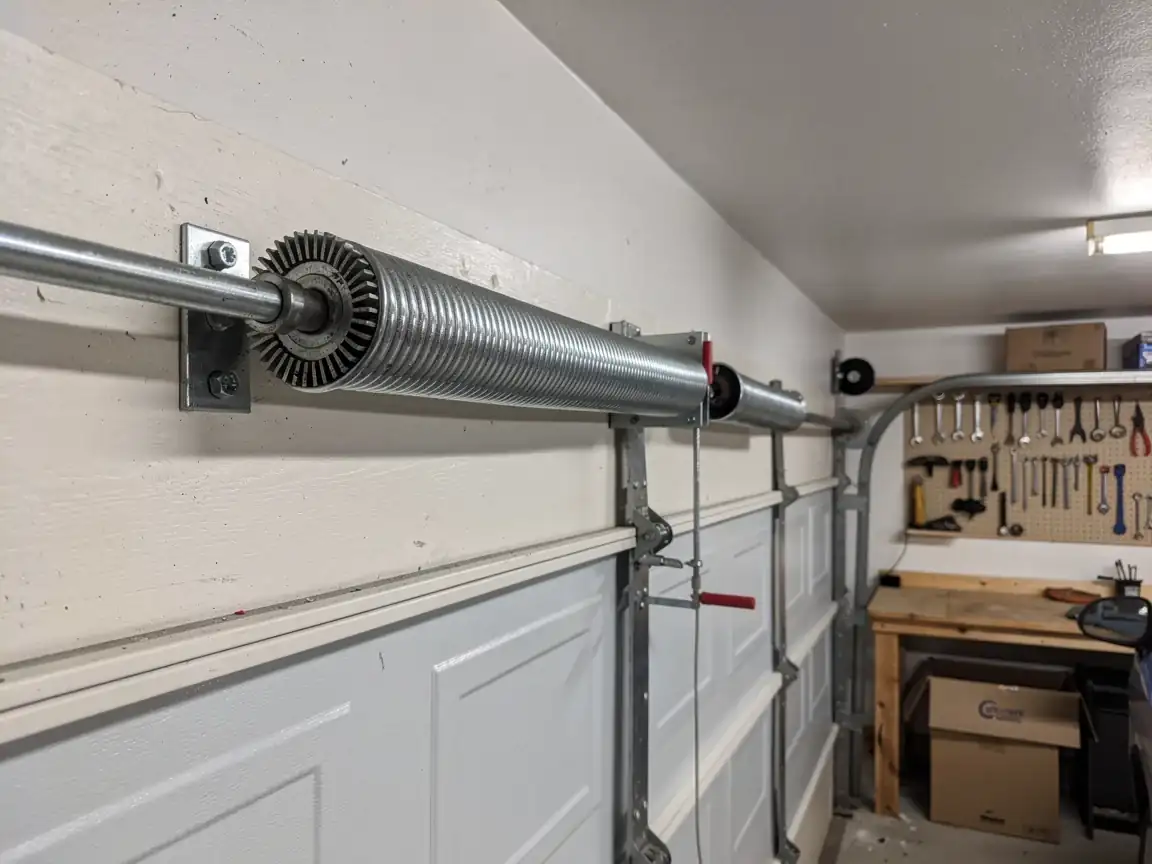
On trucks that come out to Deer Park, we carry rollers in both nylon and sealed-bearing steel, replacement track sections in the gauge that matches 1980s-era doors, and the brackets, hinges, and cable drums that wear out alongside a bad roller. Doors from this build era were set up with either extension or torsion spring systems depending on who installed the garage originally, so we bring stock for both rather than assuming one. The hinges on a door this old are usually the next thing to go after the rollers - once a hinge starts to bend, it pulls the panel out of square with the track, and that's a second way a door ends up off its rail even after you've fixed the roller. We don't carry every obsolete bracket pattern from every builder who worked this area in the 80s, and if your door has a hardware style we don't stock on the truck, we'll say so rather than force a part that doesn't fit. That's one job that sometimes needs an order placed before we come back.
What You Pay
We travel 13 miles from Friendswood to reach Deer Park, and that drive is part of the first visit rather than a separate charge tacked on after. What the job itself runs depends on what's actually wrong - a roller swap and a track reset is a different job from replacing bent track on both sides, and a cracked panel from a door that's been dragging off-track longer than it should have is different again. With median household income in Deer Park at $95,233, most owners here choose to replace worn rollers and track rather than live with a door that keeps jumping its track and getting worse. We'll tell you on the spot which category your door falls into before any work starts, and if the fix isn't worth doing against a new door, we'll say that too instead of running up a bill on hardware that's past saving.
Why It Happens Here
Deer Park sits in a mild climate band with occasional freezes, so the metal track expands and contracts just enough each year to loosen the bolts holding it to the jamb. It's not the dramatic freeze-thaw cycling you'd get further north, but it's enough movement, repeated over forty years, to walk fasteners loose on a door this old. Deer Park counts roughly 11,829 households, and a good share of them still have the original torsion or extension hardware that came with the house in the early 1980s. None of that hardware was built to run forever, and once a roller wears down past its collar, it rides higher in the track and eventually just climbs out at the first hard stop or gust against the door. Garages that sit a little out of level after decades of slab settling make it worse, because the track on one side ends up carrying more weight than the other. None of this is unique to one house - it's what happens to a door this age, in a climate like this one, after enough cycles.