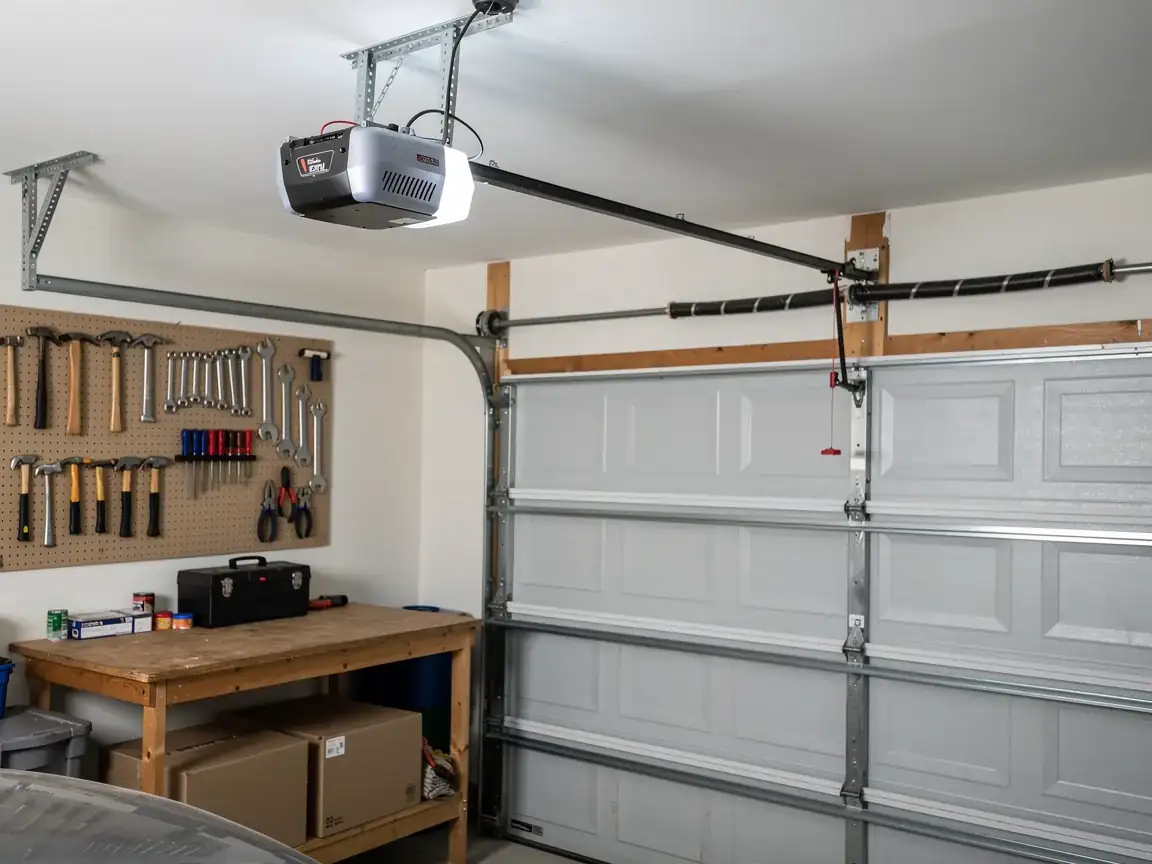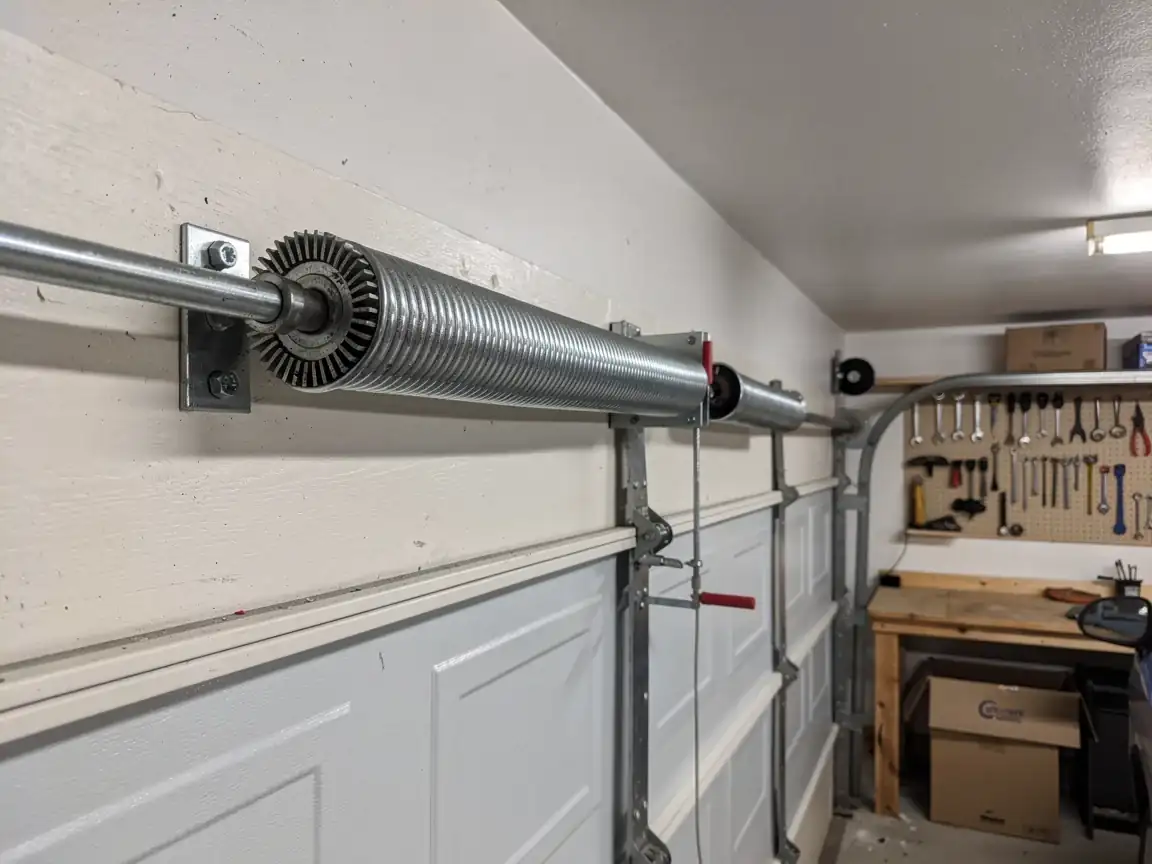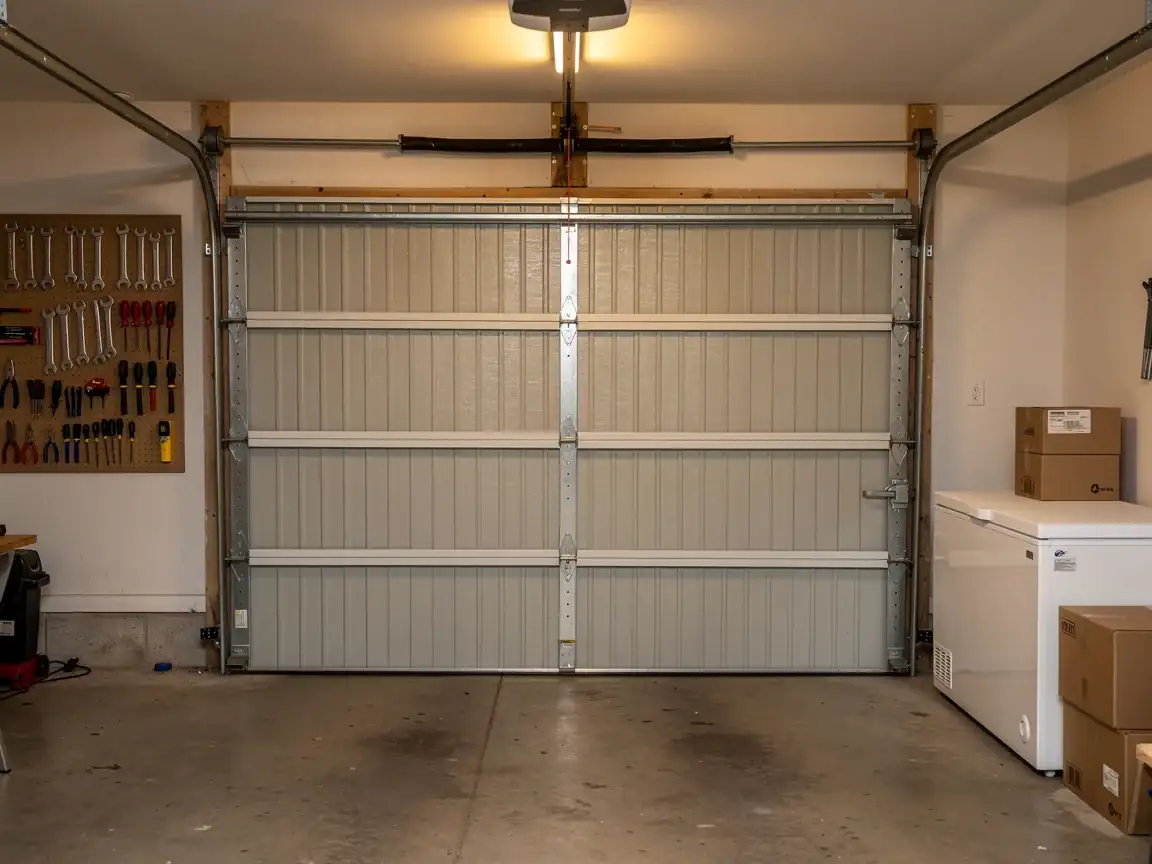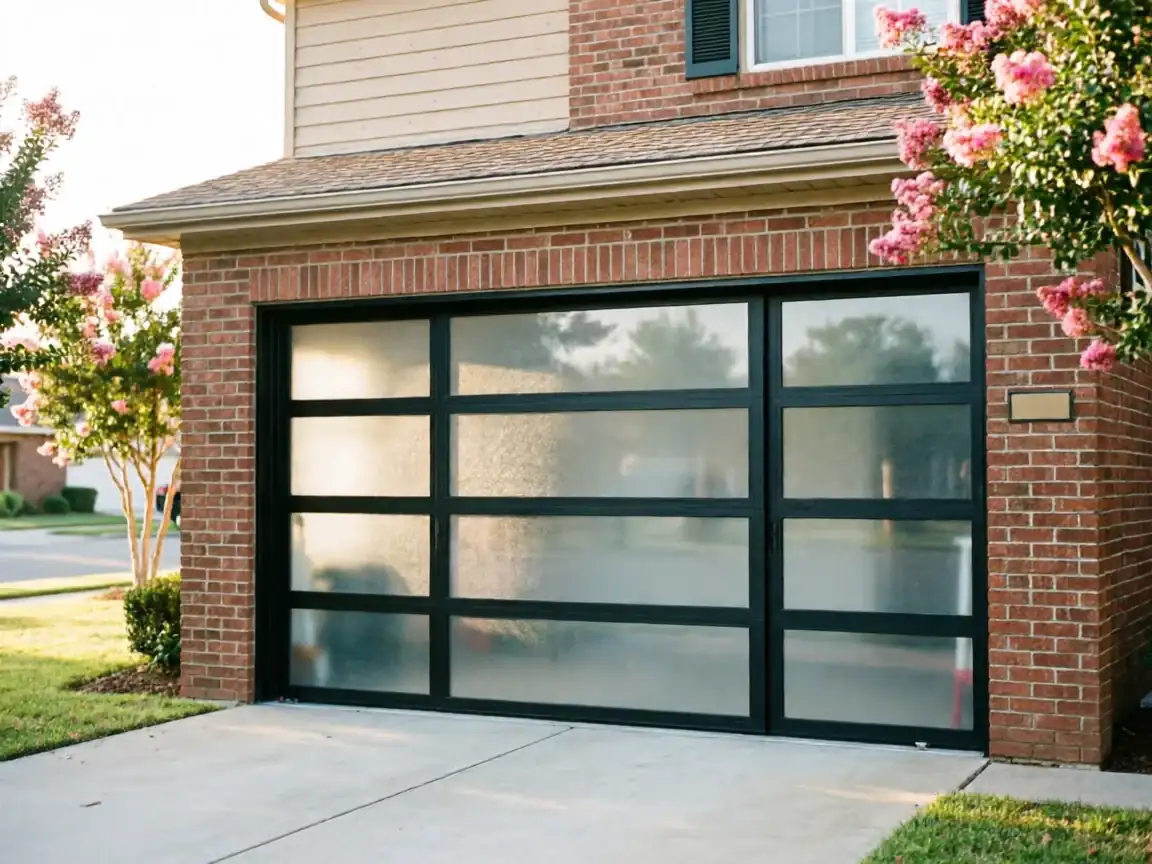
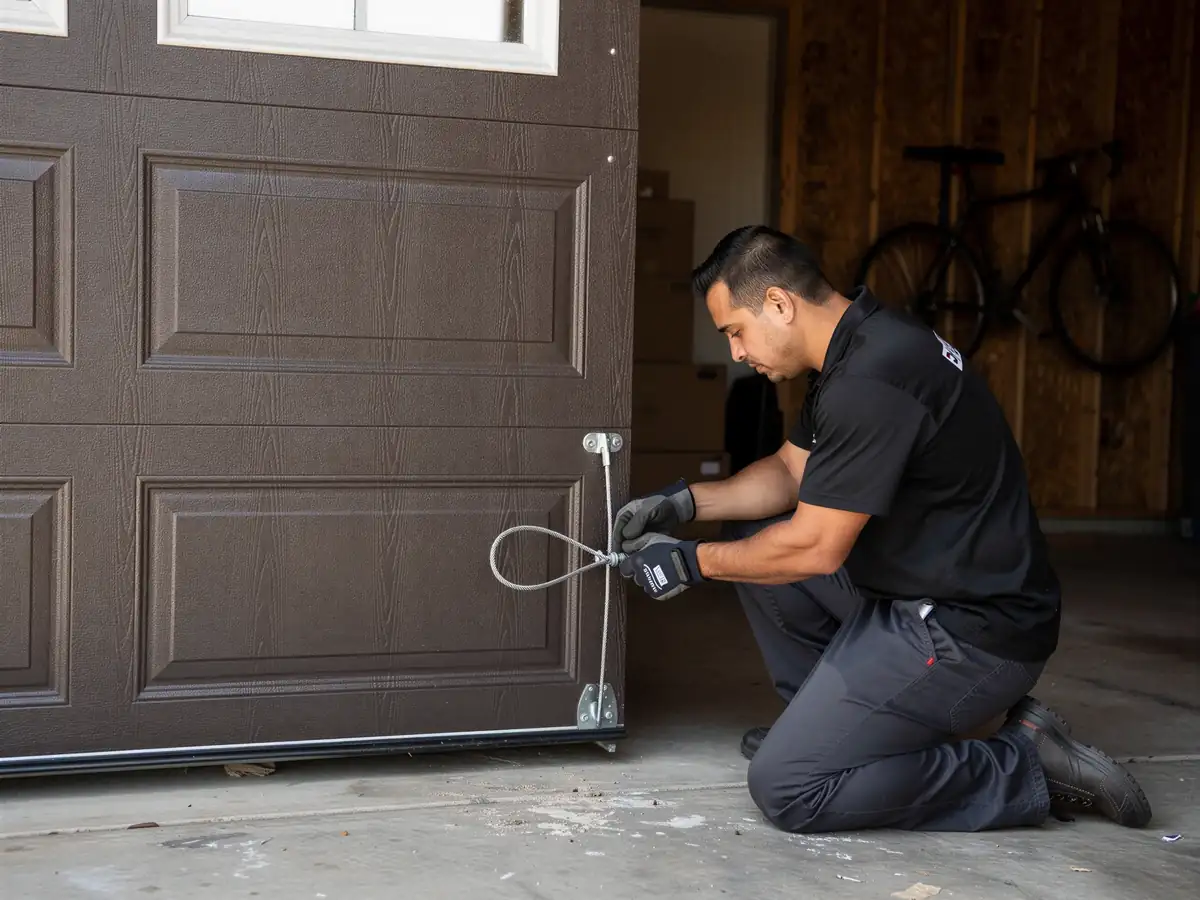
What You Are Seeing
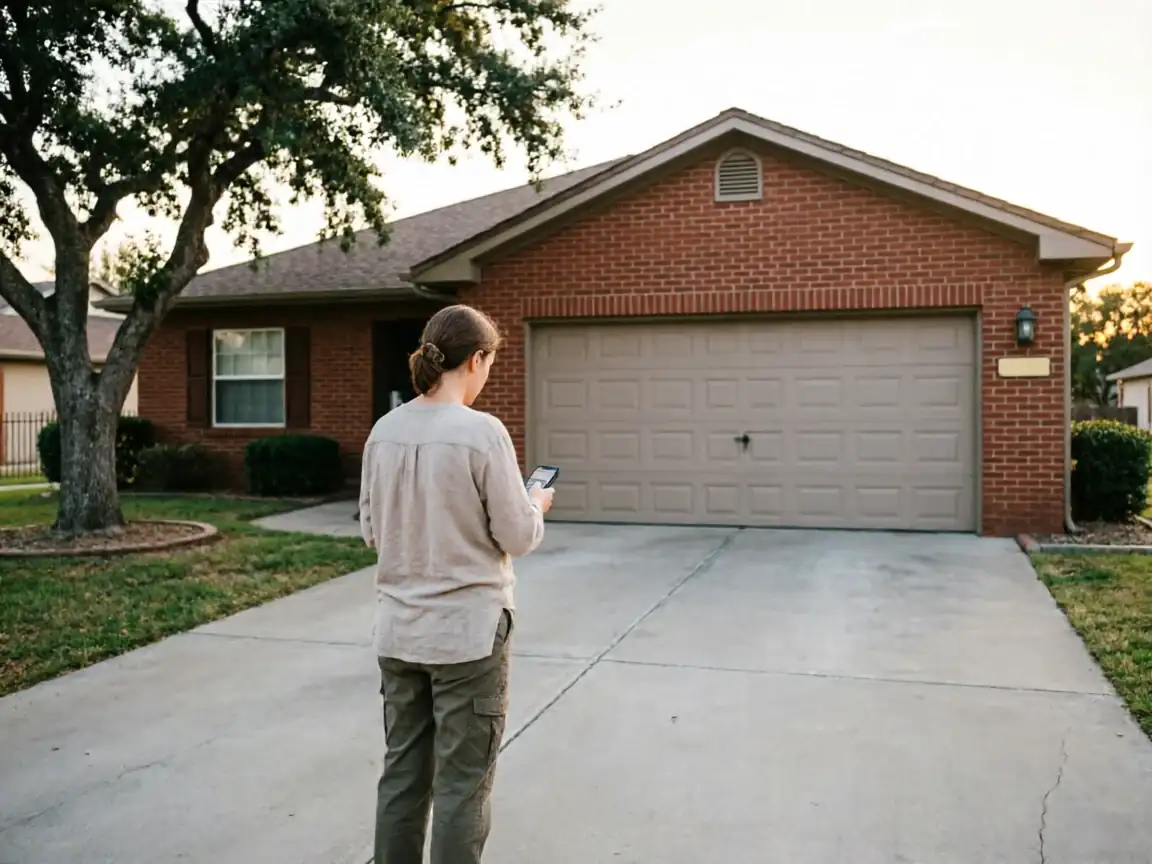
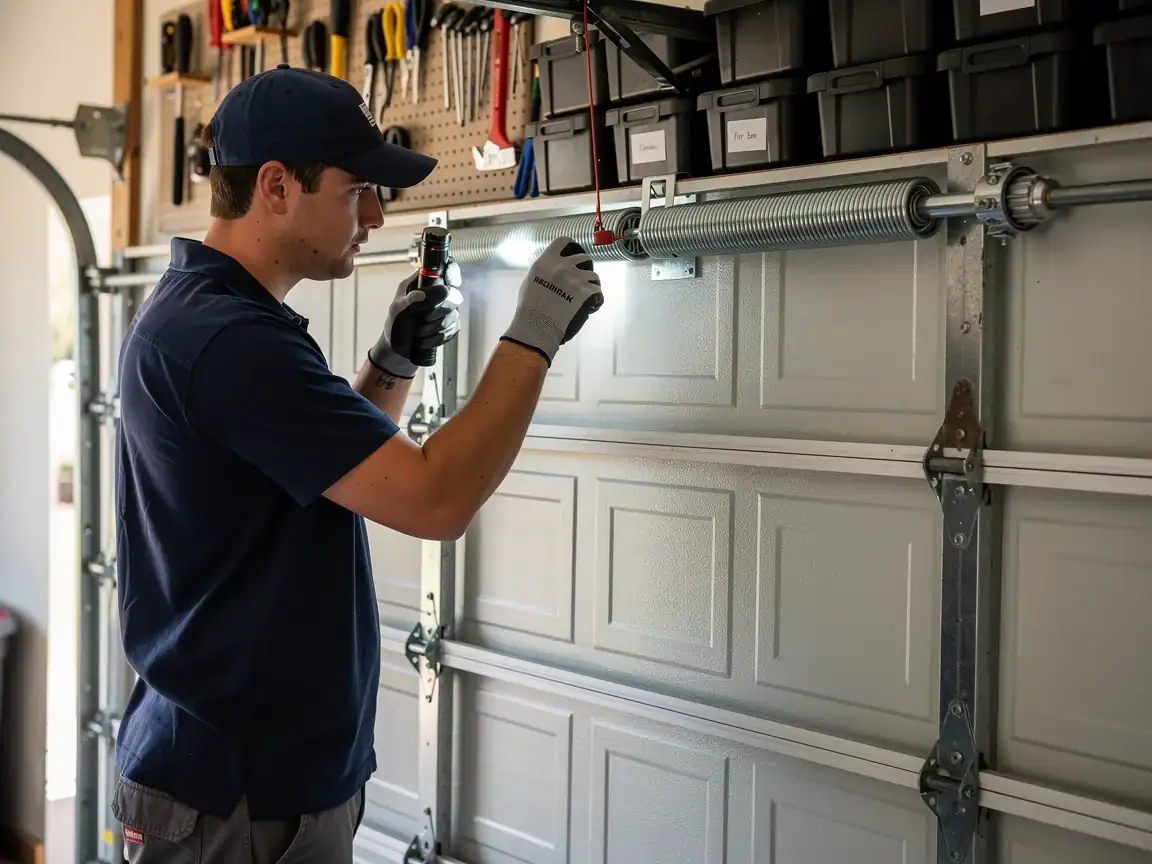
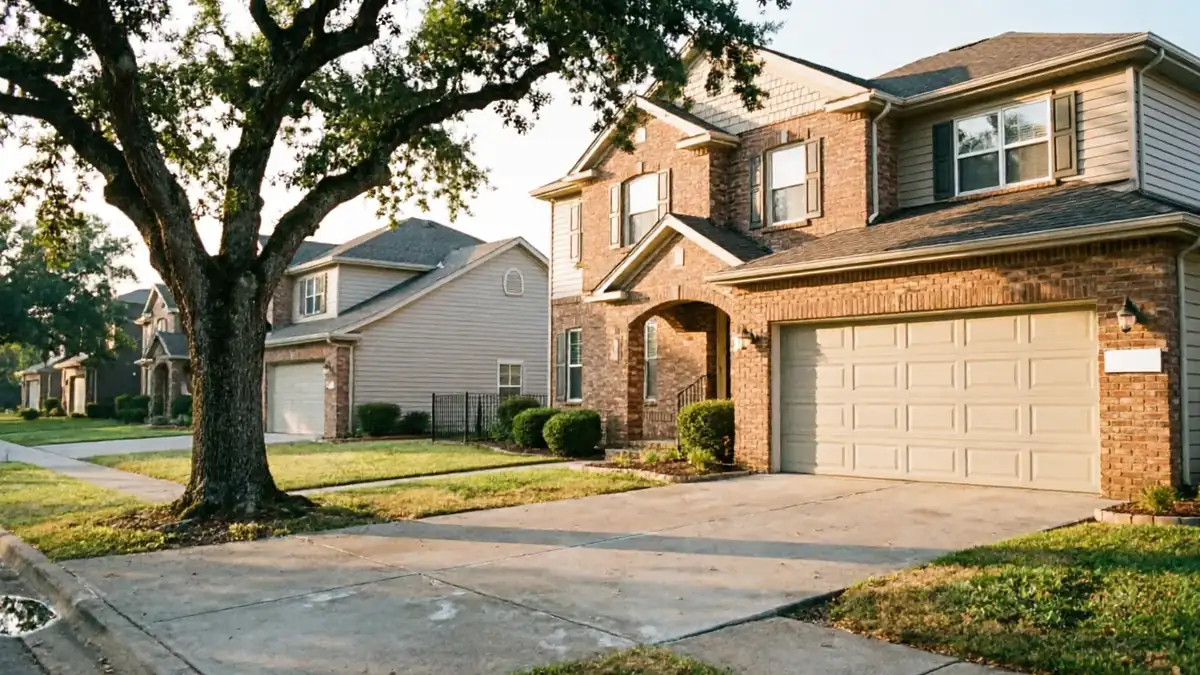
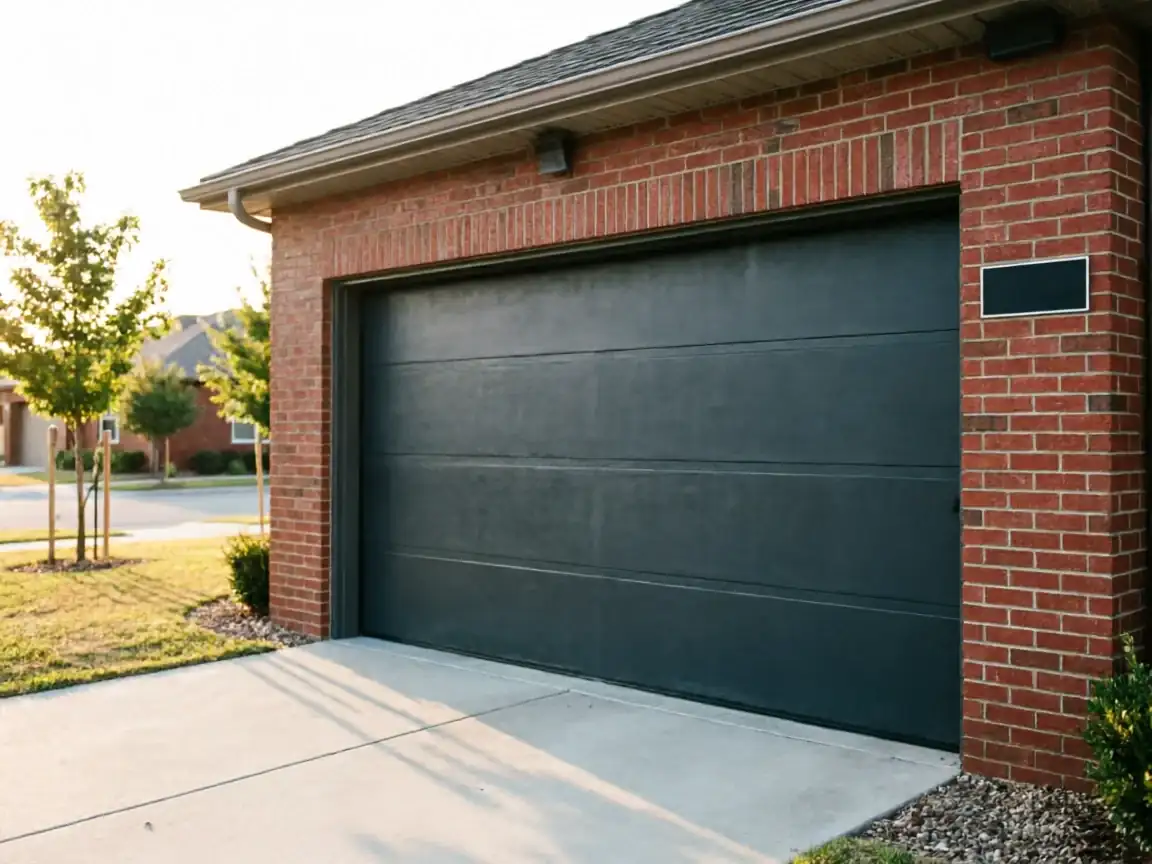
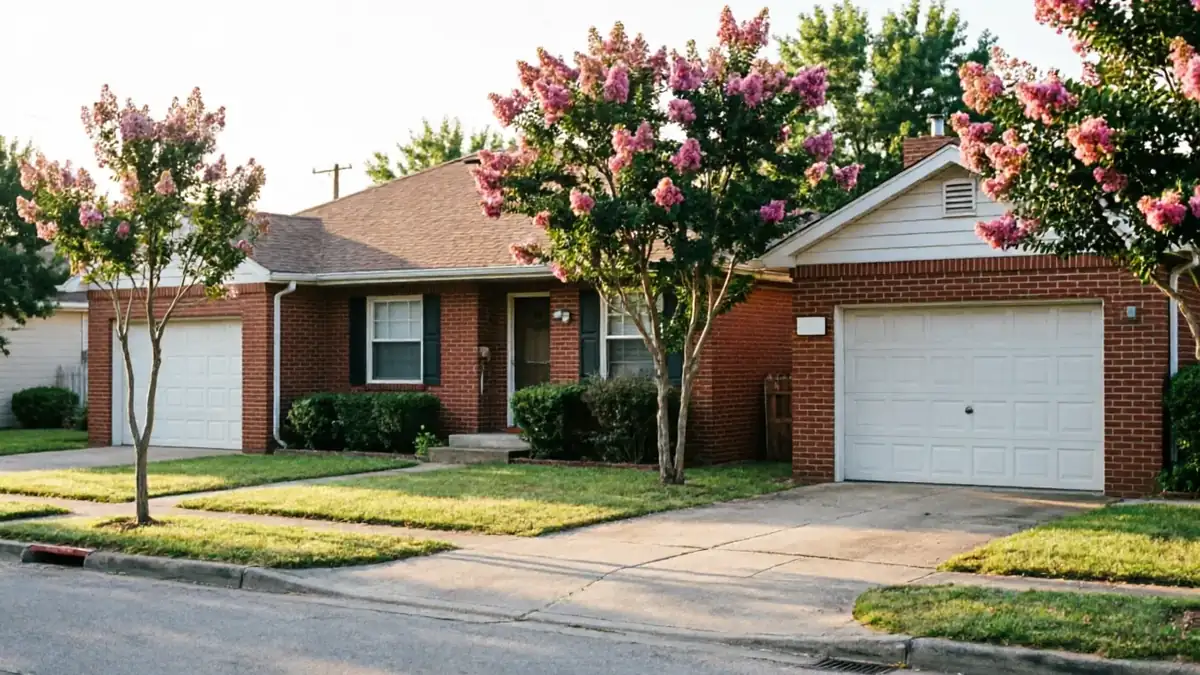
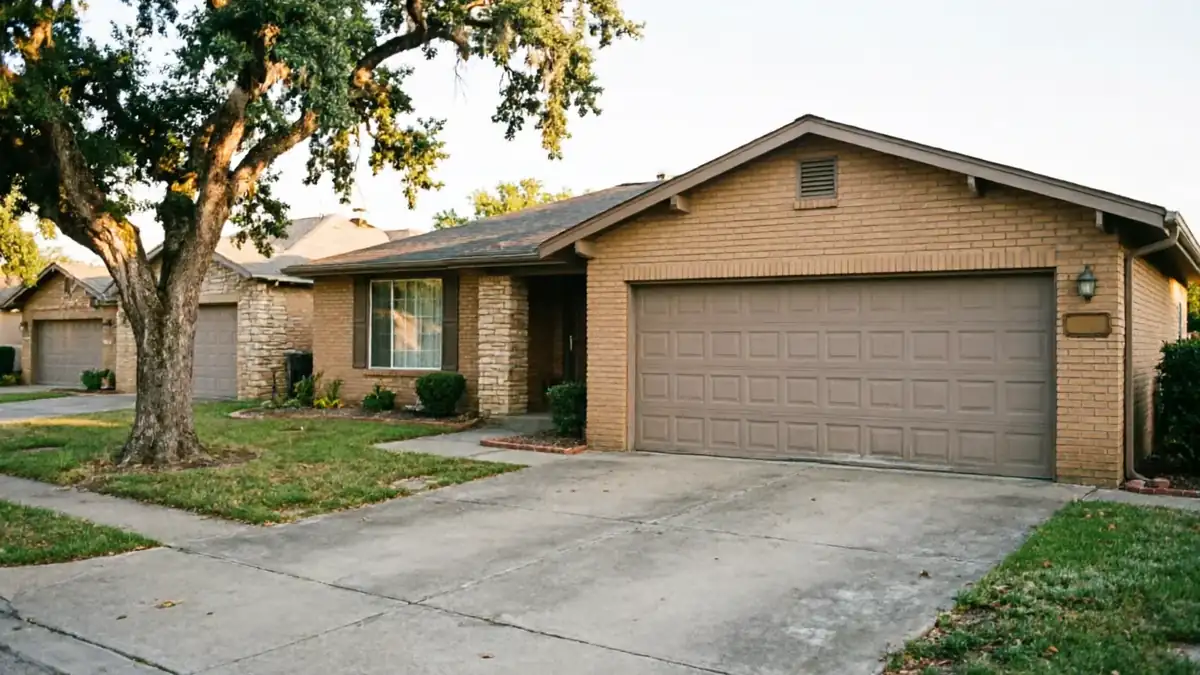
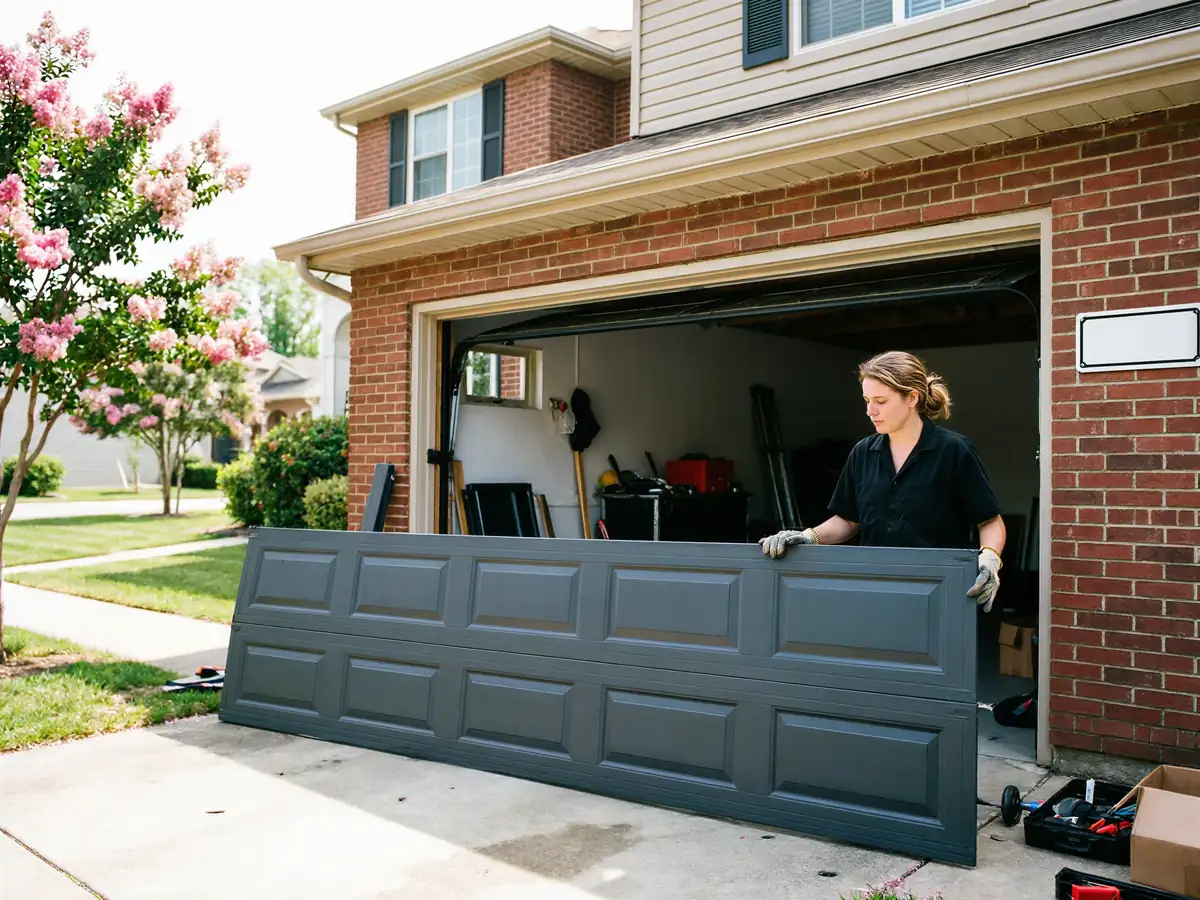
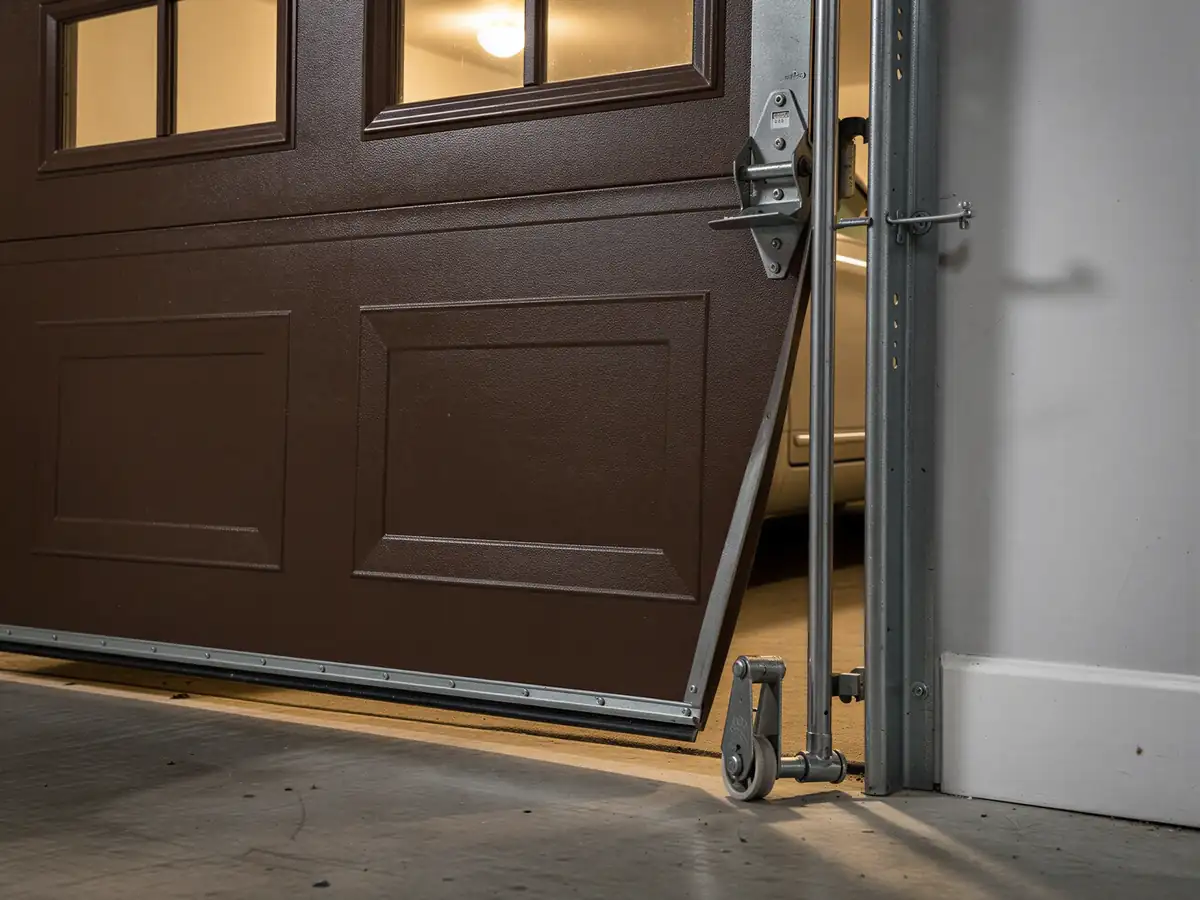
Most houses in Fresno went up well after 2006, which puts you squarely in the galvanized-cable, torsion-spring era rather than the older extension-cable setups you still find in the original 1960s and 70s pockets of the wider service area. A frayed or snapped lift cable on a door this age usually shows up the same way: one side of the door hangs lower than the other, the door looks crooked in the opening, or it stops a few inches up and won't go further. Sometimes you'll see the cable itself has jumped the drum and bunched up in loose coils near the bottom bracket. On a door from 2006 or later, the cable is doing exactly the job it was built for - carrying tension off a torsion spring overhead - so when it fails, the door doesn't ease down, it drops.
Doing It Yourself
A torsion-spring cable is under real load even when the door looks still, and the drum it wraps around is tensioned by the spring above it. Loosening the wrong bolt or trying to unwind a cable that's still carrying tension is how people get hurt, not an exaggeration we toss in for effect. If the door is down and stuck, you can usually leave it alone safely until someone looks at it - don't force the opener to keep trying, since that just chews up the track or bends the bracket. We won't talk you through doing this one yourself; it's not a weekend fix.
Time on the Job
A straight cable replacement on a torsion door usually runs under two hours once the truck is on site. If the drop damaged the bottom bracket, the track, or knocked the door off its rollers, plan on longer. We travel the 16 miles out from Friendswood to reach Fresno, so the job itself is quick, but factor that drive into when we can get there rather than assuming a same-morning arrival.
Why It Happens Here
Fresno's housing stock being newer than much of the surrounding area cuts both ways. These doors haven't had decades to wear out, but the ones installed in the early build years - 2006 through the following decade - are now old enough that original cables are reaching the end of a normal service life, typically somewhere around seven to ten years of daily cycling depending on use. With roughly 7,861 households in town, a good share of those garage doors were installed in the same handful of years, which means cable failures tend to cluster by age rather than by any one design flaw. The region's mild climate with occasional freezes isn't the driver here the way it would be somewhere with harder winters - it's cycle count and age doing the work.